
Author: trey

  • Who can legally install a fire alarm in North Carolina?
    Who can legally install a fire alarm in North Carolina?

    (919) 296-1803 Mon–Fri · 8am–5pm 809B Center Street, Apex, NC

    Who can legally install a fire alarm in North Carolina?

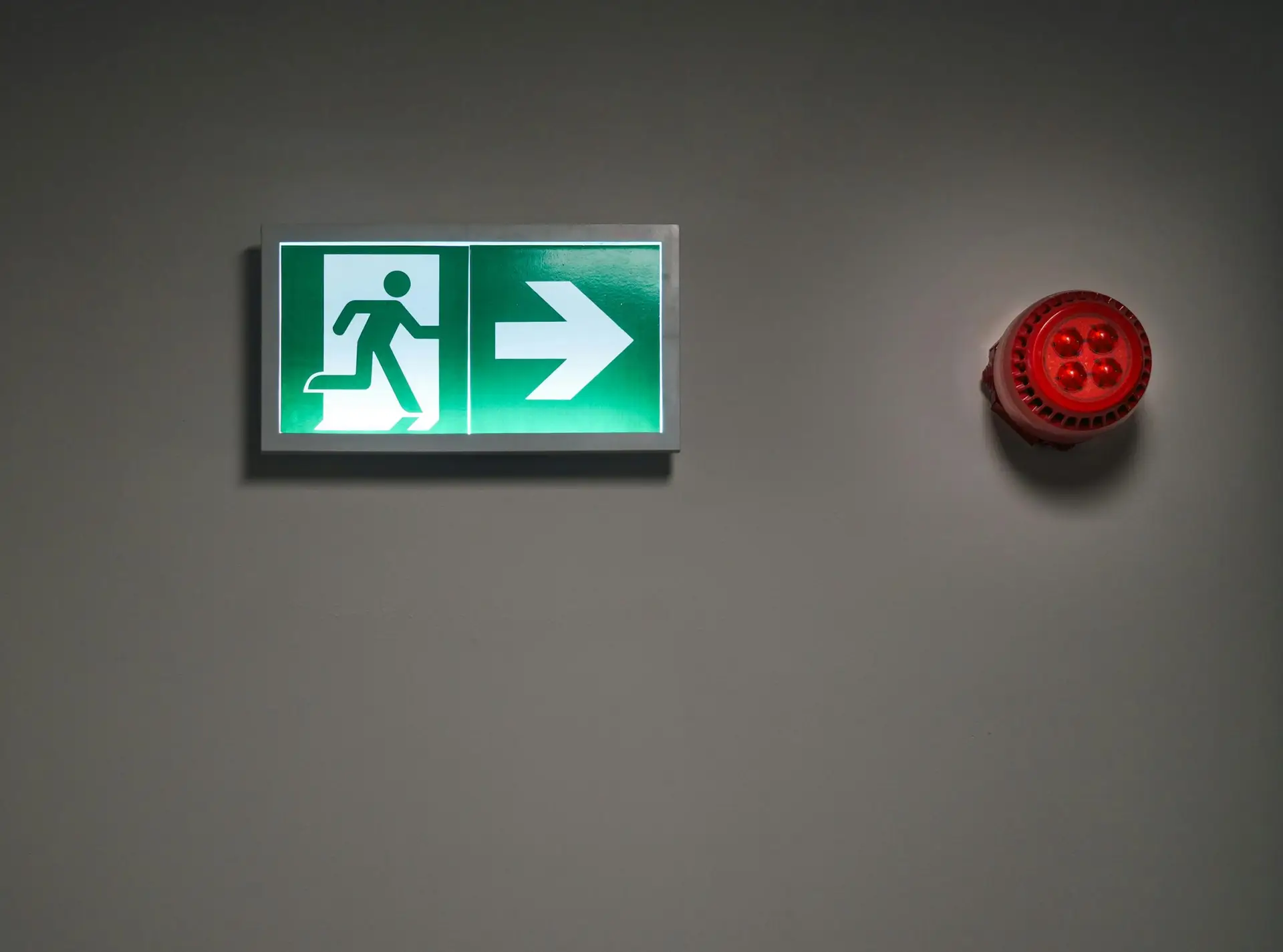
    Illuminated exit sign and wall-mounted fire alarm notification appliance in a commercial building corridor

    In North Carolina, commercial fire alarm work requires a license from the NC State Board of Examiners of Electrical Contractors, specifically the SP-FA/LV classification. The Alarm Systems Licensing Board does not cover it. State law exempts fire alarm work from that board entirely, which is why most owners check the wrong credential.

    This trips up almost everybody, including people who have managed buildings for twenty years. You ask a contractor for their alarm license. They send you a number. You write it in the file, everyone feels covered, and nobody involved notices that the number says nothing at all about fire alarm work.

    The real credential is public, free to check, and takes under a minute to look up. Here is how the structure actually works in this state, what to type into the lookup, and what goes wrong when the wrong company does the work.

    Why the NC Alarm Systems Licensing Board is the wrong place to look

    North Carolina licenses burglar alarm, access control, and CCTV work under Chapter 74D of the General Statutes. That is the Alarm Systems Licensing Board. It is a real board with real authority, and fire alarms are carved out of it.

    The carve-out is explicit, not implied. N.C.G.S. 74D-3(a)(2) says Chapter 74D does not apply to the installation, servicing, or responding to fire alarm systems. One sentence, and it is the reason a company can hold a completely valid 74D license and still have no standing whatsoever to touch your fire alarm control panel.

    It works in the other direction too. A strong fire alarm contractor may hold no 74D license at all, and that absence tells you nothing bad about them. If they also hang cameras and card readers, they need one for that side of the business. For the fire alarm system, it simply is not the relevant document.

    The credential that matters: NCBEEC SP-FA/LV

    Fire alarm work in North Carolina falls under the North Carolina State Board of Examiners of Electrical Contractors, usually shortened to NCBEEC. The classification you are looking for is SP-FA/LV, which stands for Special Restricted, Fire Alarm/Low Voltage.

    “Special Restricted” sounds like a demotion. It is not. It means the license is scoped to a defined category of electrical work instead of covering general electrical contracting, and fire alarm is that category. A company holding SP-FA/LV is licensed by the state to install and service fire alarm systems here.

    An unlimited electrical contractor license covers the work as well. That gives you two acceptable answers to the licensing question, plus one very common answer that is not an answer at all.

    What a vendor might hand youWho issues itDoes it authorize commercial fire alarm work?
    NCBEEC SP-FA/LV (Special Restricted, Fire Alarm/Low Voltage)NC State Board of Examiners of Electrical ContractorsYes. This is the one.
    NCBEEC unlimited electrical contractor licenseNC State Board of Examiners of Electrical ContractorsYes, the classification covers it.
    Chapter 74D alarm systems licenseNC Alarm Systems Licensing BoardNo. Fire alarm work is statutorily exempt from 74D.
    General contractor licenseNC Licensing Board for General ContractorsNo. Different trade, different board.
    NICET certificationNational Institute for Certification in Engineering TechnologiesNo. It is a valuable personal certification, not a state license.

    That last row causes arguments. NICET certification is genuinely useful, some AHJs and specifications require it for design or acceptance testing, and a technician who holds it has demonstrated something real. It still is not a license to contract in North Carolina. Ask for both if you want, but do not accept one in place of the other.

    How to verify a fire alarm license in about thirty seconds

    NCBEEC publishes a free license search. Go to arls-public.ncbeec.org/Public/Search and search by the company name exactly as it appears on the proposal, or by the license number if they gave you one.

    Read three things off the result. First, the classification. You want SP-FA/LV or an unlimited electrical license. Second, the status, which should read active rather than expired, suspended, or inactive. Third, the legal entity name, which needs to match the company that will actually be on your roof, not a parent company or a similarly named LLC one county over.

    The 30-second check

    • Search the company at the NCBEEC public license lookup, not the alarm board.
    • Confirm the classification reads SP-FA/LV or unlimited electrical.
    • Confirm status is active, with a current expiration date.
    • Confirm the licensed entity name matches the name on your proposal and your insurance certificate.

    What it takes to hold the license

    Qualification is not a weekend course. NCBEEC requires at least two years of experience in the classification, and at least one of those two years has to count as primary experience rather than the broader category. Then there is an examination.

    Here is the part owners rarely think about. The license belongs to the business, but it runs through a named qualified individual who sat that exam. People change jobs. So it is fair to ask a vendor who their qualifier is and how long that person has been with the company, especially if the firm was recently acquired or spun up under a new name.

    Can an electrician install a commercial fire alarm?

    With the right NCBEEC classification, yes, legally. Whether that is a good idea depends entirely on which part of the job you are talking about.

    Pulling fire alarm circuit, mounting back boxes, and running conduit is electrical work, and a competent commercial electrician does it well. Designing a system to NFPA 72 is a different skill. So is programming an addressable panel, which usually requires the manufacturer software plus factory training on that specific platform. Notifier, Fire-Lite Alarms, and Silent Knight all move through factory-authorized distributor channels, and the software is not something you download on a Tuesday afternoon.

    The failure mode is predictable. Wire gets installed cleanly, devices get hung, then the job stalls because nobody on site can produce a sequence of operation, load the program, or stand in front of the fire marshal at acceptance testing and answer for it. At that point the owner is hiring a second company to finish a job they already paid for once.

    The license is the floor. It is not the ceiling. When we look at a building at FireTek Systems, the license question is settled before the conversation starts, and the real discussion is about the panel platform, the device count, and who owns the programming afterward.

    The general contractor who “does low voltage”

    Low voltage is a category, not a qualification. Data cabling, speaker wire, door contacts, and thermostat runs all live in it. None of that makes a company a fire alarm contractor.

    You will hear a version of this on tenant build-outs, where the GC has a cabling sub already mobilized and offers to fold the fire alarm devices into their scope to save a mobilization. It is a real cost saving right up until the point where the system has to be tested, documented, and signed for.

    If your GC proposes this, ask one question: which licensed entity is signing the record of completion? If the answer is a name you have not verified at NCBEEC, you have found the gap.

    What happens when unlicensed work hits plan review

    Commercial fire alarm systems in North Carolina go through permitting, plan review, and acceptance testing with the authority having jurisdiction. That is where shortcuts surface.

    Plans submitted without proper credentials get rejected, which is the cheap outcome because it happens before anything is installed. The expensive outcome is discovery at acceptance testing, when the devices are already in the ceiling. The AHJ does not sign off. Without that sign-off there is no certificate of occupancy, and a tenant who was supposed to open on the first of the month is now sitting on a lease with no revenue.

    There is an insurance dimension too. Many commercial property policies carry a protective safeguards endorsement, which makes a working fire alarm or sprinkler system a condition of coverage rather than a discount. A system that never received sign-off is not a comfortable thing to explain to a carrier after a loss.

    Five questions to ask before you sign

    Run these past any company bidding fire alarm work in Wake County.

    • What is your NCBEEC license number and classification? The number should be volunteered without a search. Verify it yourself anyway.
    • Which legal entity holds it, and does that match the proposal? Names drift after acquisitions.
    • Who is your qualifying individual? A real name, and how long they have been with the firm.
    • Are the technicians on my building employees or subcontractors? A licensed company that subs the labor out is a different arrangement than one with in-house crews, and you should know which you are buying.
    • Are you factory authorized on the panel you are proposing? If they are installing a platform they cannot program, you inherit that problem in year three.

    None of these are gotchas. A company doing this properly answers all five in about two minutes. If the answers get vague, that is your information. And run the same check on us: our licensing, our history since 1990, and our in-house technician model are all on the about page.

    Verify the license, then talk to a licensed local team

    FireTek Systems is a Secur-Tek company serving the Triangle since 1990, with licensed in-house technicians and no subcontractors. Design, installation, inspection, and 24/7 monitoring for commercial buildings across Raleigh, Cary, Apex, and Wake County.

    Schedule a free assessment (919) 296-1803

    Frequently asked questions

    Does North Carolina require a special license to install fire alarms?

    Yes. Commercial fire alarm work requires a license from the NC State Board of Examiners of Electrical Contractors, most commonly the SP-FA/LV classification for Special Restricted, Fire Alarm/Low Voltage. An unlimited electrical contractor license also covers the work.

    Is a fire alarm contractor licensed by the NC Alarm Systems Licensing Board?

    No. N.C.G.S. 74D-3(a)(2) exempts the installation, servicing, and responding to fire alarm systems from Chapter 74D. A 74D license covers burglar alarm, access control, and CCTV work, so it does not establish that a company can legally work on your fire alarm system.

    How do I check if a fire alarm company is licensed in North Carolina?

    Use the NCBEEC public license search at arls-public.ncbeec.org/Public/Search. Search the company name or license number, then confirm the classification, the active status, and that the licensed entity name matches the company on your proposal.

    Can a general contractor install a commercial fire alarm system?

    Not under a general contractor license. Fire alarm installation requires the appropriate NCBEEC electrical classification. A GC can hold that license or carry a properly licensed subcontractor, but the general contractor license by itself does not authorize the work.

    What is the difference between a license and NICET certification?

    A license is state authority to contract for the work and it attaches to the business through a qualified individual. NICET is a national personal certification held by a technician or designer. Some projects and jurisdictions require NICET levels for design or testing, but it never substitutes for the state license.

    What if my fire alarm was installed by an unlicensed company?

    Have a licensed contractor inspect the system and document what they find, then work with your AHJ on what it takes to bring it into compliance. Expect the system to be evaluated on its merits rather than accepted, and budget for corrections to anything that cannot be verified.

    Sources: N.C.G.S. Chapter 74D, Alarm Systems Licensing · NC State Board of Examiners of Electrical Contractors, licensing · NCBEEC public license search · NC Office of State Fire Marshal, current codes. North Carolina currently enforces the 2018 NC Fire Prevention Code, based on the 2015 IFC. Confirm permitting and acceptance requirements with your local AHJ.
    What our Triangle customers say
    “FireTek handled our fire alarm system end to end — professional, code-compliant, and always responsive when we need them.”
    Facilities Director · Raleigh
    Real people. Real protection.

    Ready to protect what matters most?

    Get a free, no-pressure consultation with a local FireTek specialist serving Raleigh and all of Wake County.

  • How to compare commercial fire alarm bids (and spot what is missing)

    How to compare commercial fire alarm bids (and spot what is missing)

    (919) 296-1803 Mon–Fri · 8am–5pm 809B Center Street, Apex, NC

    How to compare commercial fire alarm bids

    Facility manager comparing commercial fire alarm bids and scope documents for a Raleigh NC building project

    To compare commercial fire alarm bids properly, normalize them line by line before you look at the totals. A cheap bid is usually cheap because something got left out: device count, conduit, permit fees, acceptance testing, as-built drawings, or battery calculations. Those exclusions come back as change orders at full price.

    Three bids land on your desk. One is $41,000, one is $57,000, one is $63,000. The low bid is four pages, the high bid is eleven, and nobody has time to read either one carefully.

    So the decision gets made on the number, and eighteen months later the project has cost $68,000 and the fire marshal has been out three times. It’s almost never dishonesty. It’s scope written loosely enough that two contractors read the same drawings and priced different jobs. Here’s how to read the documents so they’re comparable.

    Compare fire alarm bids by normalizing the device count first

    Open all three bids to the equipment schedule and count. Smoke detectors, heat detectors, pull stations, horn/strobes, strobes, modules, and the panel itself with its expansion capacity.

    If one bid has 84 smoke detectors and another has 61, one of two things is true: they’re covering different scope, or one of them underspaced the design. Detector spacing follows the listed spacing and the geometry of the ceiling, so it isn’t a matter of preference. Notification appliance count is driven by audibility and visible coverage requirements, which is also math rather than judgment.

    Ask the low bidder directly: “Show me the coverage calculation for this device count.” A contractor who did the layout can answer in a sentence. A contractor who scaled a previous job cannot.

    Same question for the panel. One sized with no spare capacity works on day one and blocks every future addition. Ask what percentage of loop capacity is used at completion. Above 80% is a problem you’ll pay for later.

    The exclusion checklist

    These are the line items that separate a complete bid from an incomplete one. Print this and mark each bid.

    Line itemWhat a complete bid statesWhat it costs if excluded
    Device count and coverage basisFull equipment schedule tied to a layout drawingDevices added during rough-in at change order rates
    Raceway methodConduit where required, plenum-rated free-air cable where allowed, stated by areaThe single largest swing between bids. Conduit is labor-heavy and nobody adds it for free later.
    Permit and plan review feesNamed as included, with the AHJ identifiedA few hundred to a few thousand, plus schedule delay if a submittal gets rejected
    Plan review resubmittalsIncluded, however many rounds it takesHourly engineering charges every time comments come back
    AHJ acceptance testing with the inspector presentIncluded, with technician time for the full testRescheduled inspections and re-inspection fees, commonly $50 to $200 each
    Battery and voltage drop calculationsStamped or signed calculations submitted with the drawingsUndersized batteries that fail the first load test
    As-built drawings, O&M manuals, sequence of operationReproducible copies delivered to the owner at acceptanceYou pay a second company to document your own system later
    120V power and dedicated circuitStated clearly as by this contractor or by othersThe classic “120V by others” line that becomes an electrician callout
    Lock-on device for the panel breakerIncludedA five dollar part that fails an inspection
    First-year inspection and monitoringPriced separately and clearly, not buried in the install numberAn install that looked cheap attached to a service rate that isn’t
    Third-party inspection report submissionNamed, with the platform identifiedOut of compliance with the city while you think you passed

    Conduit versus free-air cable, the biggest hidden swing

    If two bids differ by twenty percent and the device counts match, look here first.

    Running fire alarm circuits in conduit costs substantially more in labor than pulling plenum-rated cable through open ceiling. Where conduit is required depends on the occupancy, the construction type, whether the space is a plenum, whether the wiring is exposed to damage, and what your AHJ enforces. It’s a code question with a real answer for your building.

    What you cannot do is compare a conduit bid to a free-air bid on price. They’re different jobs. Get every bidder to state the method by area, in writing, and then either level them or throw out the one that guessed wrong.

    Permits, plan review, and the inspection nobody prices

    A commercial fire alarm installation is a permitted job with a plan review, and the review can come back with comments. That’s normal. What matters is who eats the cost of responding.

    Acceptance testing is the item most often thinned out. A proper acceptance test exercises every initiating device and every notification appliance with the AHJ inspector present, verifies the sequence of operation including any elevator recall, HVAC shutdown, or door holder release, and confirms transmission to the supervising station. On a mid-sized building that’s a day or more of technician time, sometimes two.

    A bid that allocates four hours to acceptance testing on a 90-device system is telling you something. Ask how many technician hours are carried for the test, and whether re-inspection is included if something fails. Our post on why commercial fire alarm inspections fail covers what inspectors actually check.

    The documentation you are owed, in writing

    This one is straightforward code, and it’s the exclusion that costs owners the most over a system’s life.

    NFPA 72 §14.6.1.1 requires that on system acceptance, the owner receives reproducible as-built drawings, operation and maintenance manuals, and a written sequence of operation. Not a PDF of the submittal set. The as-builts, reflecting what was actually installed, plus the manuals and the sequence.

    If a bid doesn’t name those three deliverables, you’re going to pay for them twice: once when the code says you should have gotten them, and again in five years when a service company has to trace your system by hand because nobody knows what module 3-14 does.

    NFPA 72 also expects those records to live in a documentation cabinet labeled SYSTEM RECORD DOCUMENTS rather than stuffed inside the control unit, and the owner keeps them for the life of the system. Ask each bidder whether the cabinet is included.

    Battery calculations, or how to spot a guess

    Secondary power on a standard protected-premises system has to carry 24 hours of standby plus 5 minutes of alarm at full notification appliance load. An in-building fire emergency voice/alarm system needs 24 hours plus 15 minutes at maximum connected load. And the calculation has to include a 1.25 derating factor to account for battery aging and temperature.

    So ask: “Can I see the battery calculation, including the 1.25 factor?” A contractor who did the engineering hands it over. A contractor who priced two 12V 18Ah batteries because that’s what the last job used will change the subject.

    Undersized batteries don’t fail on day one. They fail the load test two years later, which is a deficiency on your report and a repair you pay for because somebody saved forty dollars at bid time.

    Who submits your inspection report to the city

    In Raleigh, under City Ordinance No. 2015-492 effective November 1, 2015, third-party fire protection inspection reports must be submitted electronically through The Compliance Engine, and the fire protection company that performed the work does the uploading. Not you. The city’s own guidance is blunt about the consequence: the business stays out of compliance until the contractor submits the report.

    Fire alarm systems report annually under that program. Brycer, which operates the platform, charges the contractor roughly $10 to $12 per initial report, with deficiency-repair reports and acceptance test documentation free. A small number, which is exactly why it gets skipped by a bidder who works mostly outside Wake County. Ask whether they’re already submitting through The Compliance Engine for Raleigh work. If the answer is a pause, that’s your answer.

    Five questions to ask every bidder before you sign

    • What is the coverage calculation behind this device count? A layout drawing, not a number.
    • Conduit or free-air cable, by area? In writing, so all three bids can be leveled.
    • How many technician hours are carried for AHJ acceptance testing, and is re-inspection included?
    • What documentation do I receive at acceptance? You want to hear as-builts, O&M manuals, and a written sequence of operation without prompting.
    • Who submits the annual inspection report to the city, and through what platform?

    The cost that shows up years later

    One more thing to weigh, because it doesn’t appear on any bid page. Ask what panel is being proposed and how you’d service it if you changed contractors.

    “Non-proprietary” doesn’t mean anyone can work on your panel. It means the panel is available through multiple factory-authorized distributors who compete for your service contract. With a genuinely proprietary system, when your contract ends, the only company that can legally program your panel is the one you just tried to leave. Commercial fire alarm control panels are generally planned on a 15 to 20 year service life, and parts availability rather than failure usually forces the replacement decision, so this choice outlasts almost everyone who’ll be in the room when you sign.

    Ask which distributors in the Triangle can service the proposed panel. If the answer is one, you’ve learned the real price of the bid.

    Get a bid you can actually compare

    FireTek Systems designs and installs commercial fire alarm systems across Raleigh, Cary, Apex, and Wake County with in-house technicians and no subcontractors. Every proposal names the scope, the documentation, and who files your report with the city. More about us.

    Schedule a free assessment (919) 296-1803

    Frequently asked questions

    What should a commercial fire alarm quote include?

    A full equipment schedule tied to a layout, the raceway method by area, permit and plan review fees, plan review resubmittals, AHJ acceptance testing hours, battery and voltage drop calculations, as-built drawings, O&M manuals, a written sequence of operation, 120V power responsibility, and who submits the inspection report to the city. Anything not named is excluded, whatever the salesperson says.

    Why is one fire alarm bid so much cheaper than the others?

    Usually scope rather than efficiency. The most common gaps are a lower device count from an underspaced layout, free-air cable priced where conduit is required, thin acceptance testing hours, and missing documentation deliverables. Normalize the three bids item by item and the gap typically shrinks to a fraction of what it looked like.

    What happens if my fire alarm plan review gets rejected?

    The AHJ returns comments and the design has to be corrected and resubmitted, which costs schedule time. A complete bid includes resubmittals. If yours doesn’t, each round comes back as an hourly engineering charge, and the reasons are usually documentable things like device spacing, notification coverage, or an incomplete sequence of operation.

    Are fire alarm change orders normal?

    Some are, when the building or the scope genuinely changes. What isn’t normal is a change order for something the code required all along, like as-built drawings or acceptance testing. Those are signals that the original bid was incomplete rather than that the project evolved.

    Should I pick the fire alarm contractor my general contractor recommends?

    Consider them, and still get the scope in writing. A GC optimizes for the number that keeps their bid competitive, and the fire alarm system outlives the construction contract by fifteen years or more. You’ll be the one calling for service, so read the documentation and service terms yourself.

    Sources: NFPA 72, National Fire Alarm and Signaling Code, §14.6.1.1 documentation at acceptance and Chapter 10 secondary power · City of Raleigh, third-party inspection reporting (Ord. No. 2015-492) · NC Office of the State Fire Marshal, current and past codes · Industry inspection cost benchmarks. Verify requirements against the edition adopted by your AHJ.
    What our Triangle customers say
    “FireTek handled our fire alarm system end to end — professional, code-compliant, and always responsive when we need them.”
    Facilities Director · Raleigh
    Real people. Real protection.

    Ready to protect what matters most?

    Get a free, no-pressure consultation with a local FireTek specialist serving Raleigh and all of Wake County.

  • Dust, steam, and debris: fixing warehouse false alarms for good

    Dust, steam, and debris: fixing warehouse false alarms for good

    (919) 296-1803 Mon–Fri · 8am–5pm 809B Center Street, Apex, NC

    Dust, steam, and debris: fixing warehouse false alarms

    High-bay warehouse ceiling where dust causes false fire alarms on spot smoke detectors near Raleigh NC

    Dust causing false fire alarms in a warehouse is a detection design problem, not a cleaning problem. A photoelectric detector reads airborne dust the same way it reads smoke, so cleaning it buys you a few months and nothing more. The permanent fix is putting the right detection technology in the ceiling.

    Search this problem and you’ll find page after page selling you dust covers, filters, and detector shrouds. All of it stops at the same place: keep it clean. Which is like telling somebody whose roof leaks to keep a bucket handy.

    Cleaning matters. It’s just maintenance, not a solution. If your warehouse trips a detector every few weeks in dry season, the device is doing exactly what it was listed to do in an environment it was never meant to sit in.

    How warehouse dust triggers false fire alarms inside the chamber

    A photoelectric smoke detector has an LED and a photodiode set at an angle to each other inside a small dark chamber, with a light trap so the beam doesn’t reach the sensor directly. When particles enter and scatter light onto the photodiode, the detector alarms.

    The chamber has no way to tell what scattered the light. Combustion particulate, cardboard fiber off a corrugated line, gypsum dust from a saw cut, wood flour, powdered product, forklift exhaust, a spider that crawled in through the insect screen. Particles in the size range the chamber is tuned for produce the same optical signature as smoke.

    So a warehouse detector sits in a slow race. Fine particulate accumulates on the chamber walls and the light trap, background scatter creeps up, and the device’s effective sensitivity climbs. It starts alarming on conditions it ignored two years ago. Then somebody blows it out with compressed air, which drives contamination deeper into the chamber and resets nothing.

    Here’s the uncomfortable version: a detector that’s alarming on dust is more sensitive than it should be, which sounds safe and isn’t. Sensitivity outside the listed range means the device no longer performs the way it was certified to perform, in either direction.

    The measurement that settles the argument

    Sensitivity testing is the only way to know where a detector actually sits. NFPA 72 requires it within one year after installation, then every alternate year. After two consecutive tests come back inside the marked listed range, the interval can stretch to a maximum of five years.

    That five-year allowance was written for clean, stable environments. Conditioned offices. Quiet server rooms.

    Honestly, if your provider has you on a five-year sensitivity interval in a warehouse, a distribution center, or an active manufacturing floor, ask why in writing. Those buildings should be on the two-year interval at minimum, and plenty of them earn an annual check. A functional test with canned aerosol does not satisfy the sensitivity requirement, and neither does a magnet test. Different measurement entirely.

    Detectors that test outside their listed range have to be cleaned and recalibrated or replaced. Ask for the readings per device, not a pass mark on a summary page. That document is what tells you whether cleaning is holding or whether you need to change the design.

    Match the technology to the space

    This is the part vendors selling covers won’t tell you. Spot smoke detection is frequently the wrong choice for a warehouse ceiling, and it’s wrong for two separate reasons: the particulate, and the height.

    SpaceWhat usually goes wrongDetection that fits
    High-bay warehouse, 25 ft and upSpot detectors can’t see stratified smoke at that height, and they collect dust for yearsProjected beam detectors across the volume, or air-sampling detection
    Distribution and pick modulesCardboard fiber and pallet dust from constant material handlingBeam detection, or multi-criteria spot devices where height allows
    Manufacturing floor with process dustContinuous fine particulate, sometimes with a combustible dust hazard of its ownAir-sampling with filtration, engineered to the process
    Loading dock and drive-through baysVehicle exhaust, road dust, temperature swings, humidityFixed-temperature or rate-of-rise heat detection
    Battery charging and maintenance areasFumes and airborne particulate from equipment workMulti-criteria detection, or heat where the occupancy allows it
    Attached office and conditioned spaceNothing, usually. This is where spot smoke detection belongs.Standard photoelectric spot detectors

    Projected beam detectors

    A beam detector puts a transmitter on one wall and a receiver or reflector on the other, then watches how much light gets through. Smoke crossing the path obscures the beam. Because it measures obscuration over a long path rather than particles in a small chamber, it tolerates ordinary dust far better than a spot device, and one unit covers a strip of ceiling that would otherwise take a row of detectors.

    The catch worth knowing before you buy: beams need alignment, and buildings move. Thermal expansion, roof loading, and racking work can all knock a beam out of alignment and generate trouble conditions. Modern units self-compensate for gradual drift and most will tell you when they can’t. Budget for the alignment check as part of your annual service rather than treating it as a surprise.

    Air-sampling and aspirating detection

    An aspirating system runs a small-bore pipe network through the protected space with sampling holes drilled at intervals, and a fan continuously pulls air back to a detector unit with a filter in front of it. Since the detection happens in one accessible box instead of forty devices on a 32-foot ceiling, filter changes and service happen from the floor.

    Two practical advantages in a dusty building. The filtration handles particulate before it reaches the sensing element, and the sensitivity is adjustable, so the system can be set for the environment rather than fighting it. The cost is higher up front and the design work is real, meaning pipe layout, hole sizing, and airflow calculations. It’s the right answer for high-value storage, cold storage, and process areas where a spot detector was never going to work.

    Multi-criteria devices and heat detection

    Multi-criteria detectors combine photoelectric sensing with heat, and sometimes carbon monoxide, and only go into alarm when the combination looks like combustion rather than like a dusty Tuesday. They’re a spot device, so height still limits them, but they’re the biggest practical improvement available in a mixed environment.

    Heat detection deserves more respect than it gets. In a loading dock, a boiler room, a welding bay, or an unconditioned garage, a fixed-temperature or rate-of-rise heat detector alarms on fire and ignores everything else. It responds later than smoke detection by design, so the occupancy and your AHJ have to accept that tradeoff, but a heat detector that works beats a smoke detector that gets disabled after the fourth nuisance call.

    The dust cover problem nobody talks about

    Renovation and tenant construction generate more detector contamination in three weeks than a year of normal warehouse operation. So contractors cover the devices, which is correct.

    Then here’s the trap: a capped detector reports normal to the panel. It doesn’t generate a trouble signal. The panel is quiet, the display is green, and the covered devices are protecting nothing at all. Buildings have gone months with covers still on because there was no signal to remind anybody.

    Dust cover protocol for any construction work

    • Written cover list before work starts. Every device address that gets covered, dated, with the name of who covered it. Not a memory, a document.
    • Covers are a temporary measure only. They’re for active dust-generating work, not for the duration of the project, and covered devices are out of service for that period.
    • A removal walk at the end of every phase, device by device against the list, with a second person signing it.
    • Function test the covered devices after removal. Covers come off, but the dust that got past them stays inside.
    • If the work runs long, treat it as an impairment. A significant portion of your system out of service triggers notification duties, and in Raleigh a required system down more than 4 hours in 24 puts you into fire watch territory.

    Put that protocol in your construction rules, not in an email. Tenant contractors read the rules document because it’s attached to their permit package.

    What this costs versus what you’re doing now

    Run the arithmetic on your own building instead of taking anyone’s word for it.

    Count your nuisance activations over the last 24 months. For each one, add the evacuation time (headcount times loaded hourly rate times the full evacuate-and-re-enter cycle, which is rarely under 30 minutes), plus any emergency service call, plus the shift disruption on a pick line or a production run. A 60-person distribution operation at a $38 loaded rate loses roughly $1,140 in labor per evacuation before you count the restart, and that’s an illustration, not a case study. Use your numbers.

    Then compare it to what a beam or aspirating retrofit costs in the affected area. For a lot of buildings the technology change pays for itself inside two years, and the version where you keep cleaning spot detectors never stops costing money.

    Where to start, if you want the cheap version first: pull the last two inspection reports and find the sensitivity readings. If devices are drifting high across a whole area, that’s the area to redesign. If it’s two devices, it’s probably placement, which we cover in why commercial fire alarms keep false alarming.

    Stop cleaning the same detectors every quarter

    FireTek Systems designs and installs commercial fire alarm systems and smoke and heat detection built for warehouse and manufacturing conditions across Raleigh, Cary, Apex, and Wake County. Licensed in-house technicians, no subcontractors.

    Schedule a free assessment (919) 296-1803

    Frequently asked questions

    Why does dust set off a smoke detector?

    A photoelectric detector alarms when particles inside its sensing chamber scatter light onto a photodiode. Dust particles in the size range the chamber is tuned to detect scatter light the same way smoke does, so the device reads them as smoke. The detector isn’t malfunctioning, it’s reporting what it sees.

    What is the best smoke detector for a dusty environment?

    For high-bay warehouse and manufacturing space, projected beam detectors and air-sampling (aspirating) systems handle dust far better than spot smoke detectors because they measure obscuration over a path or filter the air before it reaches the sensor. In lower-ceiling areas, multi-criteria detectors that combine photoelectric sensing with heat cut nuisance activations substantially.

    Can I use a heat detector instead of a smoke detector in a warehouse?

    In specific areas, yes. Loading docks, boiler rooms, welding bays, and unconditioned space are common places where fixed-temperature or rate-of-rise heat detection is appropriate. Heat detection responds later than smoke detection by design, so the occupancy classification and your AHJ determine where it’s acceptable as the primary detection.

    Do detector dust covers cause problems?

    They cause one significant problem: a covered detector reports normal to the fire alarm panel and generates no trouble signal, so nothing reminds you it’s still capped. Every construction project needs a written list of covered devices and a documented walk to confirm every cover came off.

    How often should smoke detectors be cleaned in a warehouse?

    NFPA 72 doesn’t set a fixed cleaning interval. It requires sensitivity testing on a defined schedule and cleaning or replacement when a device falls outside its listed range. In practice, dusty warehouse and manufacturing environments need cleaning at least annually, and the sensitivity readings on your inspection report tell you whether that’s often enough.

    Sources: NFPA 72, National Fire Alarm and Signaling Code, Chapter 14 inspection, testing and maintenance · U.S. Fire Administration, NFIRS incident statistics · City of Raleigh, fire protection inspections · NC Office of the State Fire Marshal, current codes. Verify requirements against the edition adopted by your AHJ.
    What our Triangle customers say
    “FireTek handled our fire alarm system end to end — professional, code-compliant, and always responsive when we need them.”
    Facilities Director · Raleigh
    Real people. Real protection.

    Ready to protect what matters most?

    Get a free, no-pressure consultation with a local FireTek specialist serving Raleigh and all of Wake County.

  • Smoke detector placement mistakes that cause nuisance alarms

    Smoke detector placement mistakes that cause nuisance alarms

    (919) 296-1803 Mon–Fri · 8am–5pm 809B Center Street, Apex, NC

    Smoke detector placement mistakes that cause nuisance alarms

    Commercial smoke detector placement near an air supply diffuser in an office ceiling in Raleigh NC

    Most nuisance alarms in commercial buildings come from smoke detector placement, not from a bad detector. NFPA 72 sets minimum clearances of 36 inches from an air supply diffuser or ceiling fan blade tip and 10 feet from stationary cooking appliances. Break those and the device alarms on airflow, steam, or toast instead of fire.

    Here’s the frustrating part. Almost every placement guide online is written for houses. Bedroom, hallway, one per level, top of the stairs. None of that helps when you’re under a suspended ceiling in a 40,000 square foot office wondering why the same detector trips every Monday at 7am.

    So let’s flip the frame. Instead of a checklist for installing detectors, this is a walkthrough for proving the one you have is in the wrong spot.

    Why smoke detector placement beats contamination as a cause

    A photoelectric detector alarms when particles inside its sensing chamber scatter light onto a photodiode. That’s the whole mechanism. It doesn’t know what the particles are. Smoke, dust, steam, a gnat, the exhaust off a floor buffer, all of it looks similar to the optics.

    So the question isn’t whether the detector works. It’s what you’re delivering to its chamber. A device three feet from a supply diffuser gets a steady stream of whatever the return picked up, pushed right through it.

    And here’s the part that trips people up: almost none of these violations were created by the original installer. They were created later. The system was compliant on the day of acceptance, then somebody moved a diffuser during an HVAC retrofit, or a tenant put a panini press under a device that used to sit above open floor.

    The clearances, in one place

    Numbers first, so you can go measure something today.

    ConditionRequirementWhat it prevents
    Air supply diffuser or registerMinimum 36 inches (3 ft) from the detectorConditioned air blowing particulate through the chamber, and dilution that delays a real alarm
    Ceiling fanMinimum 36 inches from the blade tipsAir movement that both triggers nuisance alarms and disrupts smoke stratification
    Stationary cooking applianceMinimum 10 feetCooking aerosols and steam reaching the sensing chamber
    Cooking appliance, 10 to 20 feet2025 edition: the detector must be listed to UL 217 8th edition or UL 268 7th edition (cooking-nuisance-resistant)Nuisance alarms in the zone just outside the 10-foot exclusion
    Smooth ceiling spacing30 ft nominal on center, with all points of the ceiling within 0.7 times the listed spacing (about 21 ft)Coverage gaps in corners and along walls
    Bathroom door with a tub or shower36 inches, per NFPA 72 Chapter 29 household guidanceSteam. Note this is dwelling-unit guidance, not a commercial requirement, though the physics carries over.

    That last row matters because people quote it in commercial arguments and then get corrected. Chapter 29 covers household fire alarm systems. In an office building with a shower room, that 36-inch figure is a sensible design practice rather than something your AHJ will cite you for. Treat it as engineering judgment.

    Spot the violation: offices

    Walk your open plan with your head up. You’re looking for four things.

    A detector in the throw of a diffuser. The easy test is a tissue or a strip of paper held at the detector. If it moves, so does everything the air is carrying. Measure center to nearest edge of the diffuser, not center to center.

    A detector near a coffee station or a breakroom door. Steam from a commercial coffee brewer or a microwave, released into a corridor with a detector at the doorway, is a Monday morning alarm waiting to happen.

    A detector above a printer or copier bank. High-volume laser equipment throws fine toner particulate and heat. It rarely trips a device outright, but it loads the chamber over a couple of years.

    Detectors that used to be in the middle of nothing. Pull the as-built drawings and compare them to the current furniture and mechanical layout. Every tenant build-out since then is a chance for a device that was fine to stop being fine.

    Spot the violation: retail, restaurants, and anywhere food is heated

    The 10-foot rule from stationary cooking appliances gets violated constantly, and usually not by a restaurant. Restaurants think about this. It’s the retail store with a back-room microwave, the car dealership with a customer lounge, and the office suite that added a toaster oven that get caught.

    The 2025 edition of NFPA 72 added a real distinction here. Detectors between 10 and 20 feet from a stationary cooking appliance have to be listed to UL 217 8th edition or UL 268 7th edition, the cooking-nuisance-resistant standards. Which tells you something about how common the problem is. The committee didn’t invent that band for fun.

    North Carolina is currently on the 2018 NC Fire Prevention Code, based on the 2015 IFC, so the 2025 NFPA 72 edition may not be what your AHJ enforces today. It’s still where the industry is headed, and it’s the right specification to buy against if you’re replacing devices near a kitchen anyway.

    Spot the violation: multi-tenant corridors and shared space

    Corridor detectors are base building equipment, but the causes of their activations frequently live behind a tenant’s door.

    The pattern is predictable. A tenant does a build-out, the HVAC gets rebalanced, and the corridor return now pulls air from a space with different activity in it. Or a contractor cuts drywall a week before permit closeout and nobody covers the nearest device.

    Your defense is procedural, not technical. Build a post-construction device walk into your construction rules: every tenant improvement ends with a walk of the affected zone, checking device clearance against new diffusers and new equipment, and confirming any dust covers came off. Fifteen minutes. It’s the highest-return item in the whole document.

    Placement walkthrough, in order

    • Pull panel history first. Get the specific device address and time for every activation in the last 12 months. Without that you’re guessing.
    • Go stand under that device. Measure to the nearest supply diffuser edge, the nearest fan blade tip, and any cooking appliance.
    • Look at what runs on that schedule. HVAC setback, cleaning crews, a kitchen opening at 6am. Match the activation times to building activity.
    • Photograph it with a tape measure in the frame. A photo showing 22 inches to a diffuser ends the argument about whether relocation is warranted.
    • Check the drawings. If the device is where the approved drawings show it and the diffuser is not, the mechanical change created the violation, which matters for who pays.

    Spacing, and what the 0.7 rule actually means

    Smooth-ceiling smoke detector spacing starts at 30 feet nominal on center. That number gets treated like a maximum grid, which is only half of it.

    The real requirement is that all points on the ceiling fall within 0.7 times the listed spacing of a detector, roughly 21 feet for a device listed at 30 feet. That’s the diagonal, which is why a clean 30 by 30 grid still leaves corners short. Rooms with beams, joists, sloped ceilings, or high bays change the math further, and that’s a design calculation rather than something you eyeball.

    Why does spacing belong in a nuisance alarm article? Because underspacing gets fixed by adding devices, and devices get added in whatever spot is convenient to wire rather than the spot that’s correct. Half the misplaced detectors I see were retrofit additions.

    When relocating won’t fix it

    Sometimes the space is the problem and no location in it is good. Then you’re changing the device, not the address.

    • Multi-criteria detection. Devices that combine photoelectric sensing with heat, and sometimes carbon monoxide, and only alarm when the signature looks like combustion. The biggest practical improvement available for steamy and dusty spaces.
    • Heat detection where smoke doesn’t belong. Kitchens, loading docks, boiler rooms, and welding areas usually want a fixed-temperature or rate-of-rise heat detector. Slower to alarm, but they alarm on fire. The tradeoff is deliberate, and your AHJ has to agree the occupancy allows it.
    • Relocation, which is cheap. Moving a device six feet out of an airstream solves more problems than any technology swap, and on an addressable system it’s usually a couple hours of labor plus reprogramming the device descriptor.

    Whichever route you take, the change needs to land on the drawings and in the sequence of operation. An undocumented relocation becomes somebody’s mystery in four years. Your inspection and maintenance records are where that history lives.

    Getting the fix approved

    Relocating detectors on a system that passed acceptance is a modification, and depending on scope your AHJ may want to see it. Ask before you move devices, not after.

    The argument that works with a budget holder is a page with three things on it: the panel history showing repeat activations at one address, a photo with a tape measure showing the clearance violation, and the labor quote. Nobody argues with that page. People argue endlessly with “the detector by the kitchen keeps going off.”

    If your activations are spread across many devices instead of concentrated at one, placement isn’t your problem and you should read our piece on why commercial fire alarms keep false alarming instead. Clustered means design. Scattered means maintenance.

    Find out which detector is in the wrong place

    FireTek Systems designs, installs, inspects, and monitors smoke and heat detection across Raleigh, Cary, Apex, and Wake County. Licensed in-house technicians, no subcontractors, and a written record of every device we touch.

    Schedule a free assessment (919) 296-1803

    Frequently asked questions

    How far should a smoke detector be from an air vent?

    NFPA 72 requires a minimum of 36 inches, three feet, between a smoke detector and an air supply diffuser or register. Measure from the detector to the nearest edge of the diffuser. The same 36-inch minimum applies to the blade tips of a ceiling fan.

    How far does a smoke detector have to be from a stove or cooking appliance?

    The minimum is 10 feet from a stationary cooking appliance. Under the 2025 edition of NFPA 72, a detector installed 10 to 20 feet from one has to be listed to UL 217 8th edition or UL 268 7th edition, the cooking-nuisance-resistant standards. Confirm which edition your AHJ enforces before you buy.

    Should I use a heat detector instead of a smoke detector in a commercial kitchen?

    Usually yes. A fixed-temperature or rate-of-rise heat detector responds to fire without responding to cooking aerosols, steam, or grease vapor. It alarms later than a smoke detector by design, so the occupancy and the AHJ have to accept that tradeoff, and it doesn’t replace a kitchen hood suppression system.

    My office smoke detector keeps going off and the detector tests fine. What now?

    Pull the panel history and find out whether the activations are all at one address or spread across several. One address repeating points at the environment around that device: a diffuser, a doorway, a piece of equipment. Go measure the clearances before you replace anything.

    Can I move a smoke detector myself?

    No. Relocating an initiating device changes a system that was approved and accepted, it usually requires reprogramming on an addressable panel, and depending on scope your AHJ may need to review it. It also has to land on the as-built drawings, or the next inspector finds a device that isn’t where the drawings say.

    Sources: NFPA 72, National Fire Alarm and Signaling Code, Chapter 17 initiating devices and Chapter 29 household guidance · NC Office of the State Fire Marshal, current and past codes · U.S. Fire Administration, NFIRS incident statistics. Verify all clearances against the code edition adopted by your AHJ.
    What our Triangle customers say
    “FireTek handled our fire alarm system end to end — professional, code-compliant, and always responsive when we need them.”
    Facilities Director · Raleigh
    Real people. Real protection.

    Ready to protect what matters most?

    Get a free, no-pressure consultation with a local FireTek specialist serving Raleigh and all of Wake County.

  • How an unrepaired fire system deficiency can void your claim

    How an unrepaired fire system deficiency can void your claim

    (919) 296-1803 Mon–Fri · 8am–5pm 809B Center Street, Apex, NC

    How unrepaired fire protection deficiencies can void an insurance claim

    Commercial fire alarm inspection report showing deficiencies that affect an insurance claim at a Raleigh NC building

    An unrepaired fire protection deficiency can affect an insurance claim, because a working alarm or sprinkler system is frequently a condition of coverage rather than a discount on it. Commercial property policies carry a protective safeguards endorsement, ISO form CP 04 11. Impair the safeguard without telling your carrier and coverage can suspend until it’s restored.

    Most owners treat fire protection as a code obligation with an insurance benefit attached. Pass the inspection, keep the fire marshal happy, shave something off the premium.

    That’s backwards, and the difference shows up at the worst possible moment. Your policy may not be paying you a discount for having a sprinkler system. It may be covering you because you have one, on the written condition that it works. Here’s the form, the mechanism, and what to do the day a system goes down.

    The form almost nobody in fire protection names

    Search fire protection and insurance and you get a hundred pages saying sprinklers lower your premium. Often true, and close to useless.

    The document that actually governs the relationship is a protective safeguards endorsement. In the standard ISO commercial property program it’s form CP 04 11. IRMI, the reference the insurance industry itself uses, describes it as an endorsement that makes the insured’s maintenance of protective safeguards a condition of the property coverage. Not a rating credit. A condition.

    The endorsement schedule lists which safeguards apply to which locations. The common symbols cover automatic sprinkler systems, automatic fire alarm systems reporting to a central station or the fire department, security services, service contracts on those systems, and an open category the carrier fills in with whatever it wants to require at your specific building.

    Ask your broker for a copy of the endorsement and its schedule. Not the policy summary. The endorsement. It’s two pages, and reading it takes ten minutes.

    What “suspended until restored” actually means

    The mechanic is blunter than most people expect. Under a protective safeguards endorsement, if you knew a protective system was impaired and failed to notify the carrier, property coverage can be suspended at that location until the system is restored to working order.

    Suspended, in that context, doesn’t mean reduced or subject to a higher deductible. It means the coverage isn’t there while the condition isn’t met. IRMI has published commentary arguing these endorsements deserve a warning label precisely because insureds don’t understand how sharp that edge is.

    The exact trigger language varies. Some versions turn on knowledge of the impairment, some on failure to notify, some on both, and some carve out systems down for reasons outside your control. Which is why your endorsement schedule matters more than any general article, including this one.

    What doesn’t vary much: the notification duty is on you, it usually says “immediately,” and nobody in the chain reminds you.

    Reading your inspection report like an underwriter would

    Your annual ITM report doesn’t say “insurance problem.” It uses three words, and they map cleanly onto three different levels of exposure.

    What the report saysWhat it means physicallyInsurance consequenceWhat you owe the carrier
    Noncritical deficiencySomething is wrong but the system still performs its function. Missing signage, a documentation gap, a spare head cabinet that’s short.Low direct exposure. Accumulates into a pattern a loss control rep will notice.Nothing immediate. Fix it and keep the closeout record.
    Critical deficiencyThe system’s ability to perform is reduced. A dead device, a failed battery load test, a detector outside its listed sensitivity range.Real. This is where a carrier argues the safeguard wasn’t maintained.Check your endorsement. Many require notice for anything that degrades the safeguard.
    ImpairmentThe system, or a portion of it, is out of service. Valve closed, panel down, zone disabled.Highest. This is the condition the endorsement is written about.Notify, in writing, the day it happens. Notify again on restoration.

    The middle row is where owners get hurt. An impairment is obvious and people act on it. A critical deficiency looks like a line item on a report, gets a quote attached, and sits in a folder for eight months waiting on a budget cycle. Then something burns, and the adjuster’s first request is your last three inspection reports.

    Those reports are yours to keep, by the way. NFPA 72 requires the owner to hold system records for the life of the system, and a supervising station to retain its records for at least 12 months. If your provider has all your paperwork and you have none, fix that this week.

    Who found the deficiency changes the story

    There are two ways a deficiency gets documented, and they land very differently.

    Your ITM vendor found it. This is the good version even though it doesn’t feel like it. The finding is dated, described, and attached to a proposed repair. If you approve the repair and the closeout gets documented, you’ve built a clean record of a building owner acting on information. That record is a defense.

    The carrier’s loss control representative found it. Now the finding lives in the insurer’s file, with a recommendation and usually a deadline. Loss control recommendations aren’t suggestions in the casual sense. Ignoring them shows up at renewal as a premium change, a coverage restriction, or a nonrenewal, and after a loss it shows the carrier knew about the condition and can demonstrate you did too.

    The worst arrangement is having both: your vendor flagged it, the loss control rep flagged it, and neither one got closed. At that point the paper trail argues against you.

    What to send your carrier when a system goes down

    Notification does not need to be elaborate. It needs to be written, dated, and specific. Email your broker and copy whoever the endorsement names.

    Impairment notice: what to include

    • Which system and which portion. “Sprinkler zone serving the second floor east wing,” not “sprinklers.”
    • Date and time it went out of service, and who took it out. Panel history or a valve tag gives you both.
    • Why. Planned repair, failed component, water main work, tenant construction.
    • What you’ve put in place meanwhile. Interim measures, contractor on site, restricted hot work, expected restoration date.
    • Who to contact. Your name and the service contractor’s name and number.
    • A second message on restoration, with the date, time, and the test that confirmed the system is back. This one gets forgotten constantly, and it’s the message that closes the exposure.

    Keep both messages. Five years from now, a two-line email with a timestamp is worth more than anybody’s memory of a phone call.

    Do sprinklers actually lower commercial insurance premiums?

    Usually yes, and the credit can be meaningful, because a sprinklered building is a smaller expected loss. That’s the part everybody sells you.

    The part that gets left out: once the credit is applied and a protective safeguards endorsement is attached, you’ve traded a lower premium for a maintenance obligation with teeth. A building that’s sprinklered and impaired is priced as a protected building while being exposed like an unprotected one, which is exactly the mismatch the endorsement exists to prevent.

    So the premium question and the coverage question are the same question asked twice. You keep the credit by keeping the system in service, and you keep the coverage the same way.

    The repair quote on your desk is an insurance document

    Here’s the reframe worth taking to your CFO. A deficiency repair quote isn’t a maintenance expense competing with parking lot resurfacing. It’s the price of keeping a condition of coverage satisfied.

    Run the comparison in the open. A $4,200 quote to replace failed devices and correct a critical deficiency, against a building with $6 million of property coverage plus business income. You don’t need a probability estimate to see which way that goes. The repair is roughly seven hundredths of one percent of the coverage it protects.

    That’s an illustration, not your numbers. Put your own values in it and take it to the meeting, because the argument works better with your building’s figures than with mine.

    Two other things that keep this from happening again: a service agreement that actually performs the required inspection and testing rather than a walkthrough with a clipboard, and supervision on the equipment that fails silently. A closed valve is the classic example, which is why sprinkler system monitoring and a documented valve audit earn their keep.

    What this article is not

    We install, inspect, and monitor fire alarm systems. We don’t sell insurance, and nothing here is coverage advice for your policy.

    Policy language varies by carrier, by state, and by how the schedule was filled in for your locations. Manuscript endorsements can differ substantially from the ISO form. Read your own endorsement, and if the language is ambiguous, that’s a conversation for your broker rather than your alarm contractor. What we can tell you is what’s on your inspection report, what it means physically, and how fast it can be corrected.

    Get the deficiencies on your report closed out

    FireTek Systems inspects, repairs, and monitors commercial fire alarm systems across Raleigh, Cary, Apex, and Wake County with licensed in-house technicians. Documented findings, documented corrections, records you can hand to a carrier.

    Schedule a free assessment (919) 296-1803

    Frequently asked questions

    What is a protective safeguards endorsement?

    It’s a commercial property endorsement, ISO form CP 04 11 in the standard program, that makes your maintenance of listed protective systems a condition of coverage. The schedule names which safeguards apply at which location, commonly automatic sprinklers and a monitored fire alarm system. If a listed safeguard is impaired and you don’t notify the carrier, coverage at that location can be suspended until the system is restored.

    Can an insurance company deny a claim over a fire alarm deficiency?

    It depends entirely on your policy language and the facts. A carrier is far more likely to contest a claim where a protective safeguards condition was in place, the system was knowingly impaired, and no notice was given. A documented deficiency with a documented repair in progress is a much stronger position than an open finding nobody acted on.

    What does “deficiency” mean on a fire alarm inspection report?

    It means the inspector found a condition that doesn’t meet the requirement. Reports generally separate noncritical findings, which don’t stop the system from working, from critical findings, which reduce its ability to perform. Anything that puts the system or a portion of it out of service is an impairment and belongs in a different category entirely.

    Do I have to tell my insurance company every time my fire alarm has a trouble signal?

    Almost certainly not, since a trouble condition on one device isn’t the same as an impaired system. The threshold is in your endorsement language. As a working rule, notify when a required system or a defined portion of it is out of service, and handle routine troubles through your service contractor. The trouble signal timeline is a separate topic with its own clock.

    Who is responsible for insurance notification in a leased building?

    Usually the party whose policy carries the endorsement, which for base building fire protection is normally the owner or property manager. Tenants often carry their own property policies with their own conditions. Both parties should know which one is obligated to notify, and that belongs in the lease rather than in a phone call after something breaks.

    Sources: IRMI, protective safeguards endorsement · IRMI expert commentary, protective safeguards endorsements · NFPA, U.S. Experience with Sprinklers · NFPA 72, National Fire Alarm and Signaling Code, Chapter 14 record requirements · NFPA 25 impairment procedures. Not insurance advice. Verify against your own policy and the code edition your AHJ enforces.
    What our Triangle customers say
    “FireTek handled our fire alarm system end to end — professional, code-compliant, and always responsive when we need them.”
    Facilities Director · Raleigh
    Real people. Real protection.

    Ready to protect what matters most?

    Get a free, no-pressure consultation with a local FireTek specialist serving Raleigh and all of Wake County.

  • Closed valves: the silent reason sprinkler systems fail

    Closed valves: the silent reason sprinkler systems fail

    (919) 296-1803 Mon–Fri · 8am–5pm 809B Center Street, Apex, NC

    Closed valves: the silent reason sprinklers fail

    Sprinkler riser with an OS&Y control valve and tamper switch in a commercial building in Raleigh NC

    When a sprinkler system fails to control a fire, the most likely reason is that someone closed a valve. NFPA research puts it near six in ten failures. A closed sprinkler control valve makes no noise and leaks nothing, so a supervised tamper switch is usually the only thing that will tell you.

    Sprinkler hardware is boring in the best way. A fusible link or glass bulb holds until the air gets hot enough, then lets go. No software, no battery, nothing to drift out of calibration. Which is why the failure data reads the way it does.

    Systems that fail mostly fail because the water was already off before the fire started. Here is what the research says, why the failure is invisible, and how to check every valve in your building in about an hour.

    What the sprinkler failure data actually says

    NFPA’s U.S. Experience with Sprinklers research has repeatedly found the single biggest reason sprinklers fail is that someone shut the system off. That was 59% of failures in the 2017 report covering 2010-2014 data, and roughly 60% consistently across editions. The 2009 report, working from 2003-2006 data, put it at 63%. The number barely moves.

    The same research contains the best argument for sprinklers anybody has ever published. Sprinklers operated in 92% of fires large enough to activate them, and where they operated they were effective in 96% of those cases. Put the two sets of numbers side by side and the picture gets uncomfortable. The equipment works. The failures are administrative.

    That should change how you think about your sprinkler budget. You aren’t buying reliability from the pipe. You’re buying it from whoever confirms the valves are open.

    Why a closed valve is completely silent

    A smoke detector that stops working eventually tells on itself. It goes into trouble, or fails a functional test, or starts nuisance alarming. A closed control valve does none of that.

    In a wet pipe system, the piping above a closed valve stays full of water. The gauge on the riser can still show pressure sitting there, because that water has nowhere to go. Nothing drips. Nothing hums. Walk past it every day for two years and it looks exactly like a system that works.

    So the whole problem reduces to one question: what is watching the valve? Either a tamper switch wired to your fire alarm panel and monitored, or a person with a flashlight and a checklist. There’s no third option, and the flashlight version depends on somebody actually walking the route.

    Alarm, supervisory, trouble: three signals people mix up constantly

    This trips up facility staff more than anything else on a riser, and it matters because the right response is different for each one.

    SignalWhat creates itWhat it meansWhat you do
    AlarmWaterflow switch, water moving in the systemWater is flowing somewhere. Treat it as a fire.Evacuate per your plan, fire department responds
    SupervisoryTamper or valve supervisory switch, valve moved off its normal positionA valve is not where it should be. No fire.Find the valve, restore it, log the time it was closed
    TroubleWiring fault, open circuit, or power loss on either deviceThe switch itself is no longer reportingService call. Until it clears, that valve is unwatched.

    A tamper switch is not a fire alarm and should never sound like one. It should produce a distinct supervisory tone at the panel, get recorded in history, and transmit to your central station as a supervisory signal rather than an alarm. If your building treats every sprinkler signal the same way, somebody will eventually silence a supervisory and forget about it.

    Two performance details worth knowing. On a test-connection flow the waterflow switch should activate within 90 seconds, because the retard chamber absorbs short pressure surges so a water hammer doesn’t dispatch the fire department, and audible notification has to start within 5 minutes. NFPA 25 asks for quarterly visual inspection plus semiannual operational testing on both flow and tamper switches.

    Walk the building and check every valve

    You can do this yourself. Looking at a valve stem takes no license, and the owner who walks this route once a quarter catches things nobody else will.

    Valve audit checklist

    • Post indicator valve (PIV) outside. The target window in the housing reads OPEN or SHUT in plain English. Confirm the chain and padlock are intact and the lock is holding it open, not holding it closed.
    • OS&Y valve at the riser. Outside screw and yoke: threaded stem sticking out of the yoke means open, flush stem means closed. That protruding stem is the whole point of the design.
    • Backflow preventer OS&Y valves. There are two, one on each side of the assembly, and they are the ones most often left partly closed after annual backflow testing. Check both.
    • Butterfly and wafer valves. No visible stem, so read the handle or the gear operator position indicator. These are the easiest to misjudge from across a room.
    • Floor control assemblies. Every floor or zone valve in a multi-story or multi-tenant building. This is where leak repairs happen and where valves get left closed.
    • Sectional and system control valves. Anything isolating part of the building, including valves inside tenant spaces your staff doesn’t routinely enter.
    • Tamper switch on each one. Not just present. Wired, addressed, and showing up in the panel history when someone turns the valve during a test.

    One detail that confuses people during the walk: a properly set OS&Y is opened fully, then backed off about a quarter turn so the stem doesn’t seize against the bonnet over the years. That quarter turn is normal. Anything more than that is not.

    How valves end up closed in the first place

    A head weeps, maintenance shuts the floor control valve to stop the drip, and the repair gets scheduled for Monday. Backflow testing closes both OS&Ys and the tester reopens one of them by feel. A contractor isolates a zone for a tenant build-out, finishes Thursday, and the reopening lands on nobody’s punch list.

    Then there is the version I find most often: the tamper switch works fine, it sent a supervisory signal to the panel two years ago, the signal was annoying, and somebody disabled the point instead of fixing the valve. The panel is quiet. The building is not protected. Pull your panel’s disabled-point list and read it before you assume this isn’t you.

    The moment a closed valve becomes a formal impairment

    Turning a sprinkler valve off is not automatically a violation. Leaving it off without following the impairment procedure is.

    NFPA 25 treats a system out of service more than 10 hours in a 24-hour period as an impairment requiring formal handling: an impairment coordinator, tagging, notification, and either evacuation, a temporary water supply, or an approved fire watch until the system is restored. Below that threshold you still tag and document.

    Do not confuse that 10-hour figure with the fire alarm side. In Raleigh, a required fire protection system out of service more than 4 hours in a 24-hour period triggers the fire watch requirement under the Office of the Fire Marshal’s guidance. Two different standards, two different systems, two different clocks. We covered the alarm side of that separately in trouble signals and the fire watch clock.

    The practical consequence: an unplanned Friday valve closure that nobody logs can put you outside both standards by Saturday morning, with no record of when it started.

    Your insurance policy may care more than your AHJ

    Commercial property policies frequently carry a protective safeguards endorsement, ISO form CP 04 11, which makes a working sprinkler or alarm system a condition of coverage rather than a discount. If the safeguard is impaired and you fail to notify the carrier, coverage can be suspended until the system is restored to working order. Read your own endorsement schedule, because the notification duty is usually stricter and faster than anything your fire marshal asks of you.

    Getting the valves supervised properly

    Electrical supervision is cheap relative to what it protects. A tamper switch is a small device on the valve stem or gear operator, wired back to an addressable module on your fire alarm loop. What costs money is discovering that half your valves were never wired, or that the switches report to a zone somebody disabled.

    What a proper sprinkler system monitoring setup gives you is a timestamp. Someone closed a valve at 2:14 on a Tuesday, the supervisory hit the central station, and you got a phone call before the building emptied for the night. Without it, your best case is finding out on the next quarterly walk. Ask to see flow and tamper switch results on your last two inspection reports while you’re at it.

    If you take one thing from this: ask your current provider for a list of every supervised valve on your property, with its address on the panel. If they can’t produce it in a day, they don’t know either.

    Find out which of your valves are actually watched

    FireTek Systems designs, installs, inspects, and monitors commercial fire alarm and sprinkler supervision across Raleigh, Cary, Apex, and Wake County. Licensed in-house technicians, no subcontractors.

    Schedule a free assessment (919) 296-1803

    Frequently asked questions

    How can I tell if a sprinkler control valve is closed?

    On an OS&Y valve, look at the stem. If the threaded stem protrudes from the yoke, the valve is open; a flush stem means closed. A post indicator valve has a window that reads OPEN or SHUT. Butterfly valves have no stem, so you read the handle or the gear operator’s position indicator.

    Does the pressure gauge on the riser tell me the valve is open?

    No, and this is the most common misread in the building. Piping above a closed valve in a wet system stays full and pressurized, so the gauge can look completely normal. Pressure at the gauge tells you there is water in the pipe, not that water can get to it.

    What is the difference between a sprinkler supervisory signal and an alarm?

    A waterflow switch produces an alarm signal, meaning water is moving and the building should be treated as having a fire. A tamper or valve supervisory switch produces a supervisory signal, meaning a valve has moved off its normal position with no fire involved. A wiring fault on either device produces a trouble signal.

    Does every sprinkler valve need a tamper switch?

    Valves controlling an automatic sprinkler system are normally required to be supervised, and electrical supervision through the fire alarm panel is what most authorities having jurisdiction expect on a commercial building. The specifics depend on your occupancy and the code edition your AHJ enforces. North Carolina currently enforces the 2018 NC Fire Prevention Code, based on the 2015 IFC, so confirm locally before assuming a valve is exempt.

    Can I reopen a closed sprinkler valve myself?

    Physically yes, and you should not leave it closed while you wait for a vendor. Open it slowly to full open, then back the stem off about a quarter turn, confirm the supervisory signal clears at the panel, and log the time it was closed and reopened. Then have your service provider verify flow with a main drain test, because a valve that was closed for a while deserves a check rather than an assumption.

    Sources: NFPA, U.S. Experience with Sprinklers · QRFS, flow switch and tamper switch inspection · IRMI, protective safeguards endorsement · NC OSFM, current codes · NFPA 25, Standard for the Inspection, Testing, and Maintenance of Water-Based Fire Protection Systems. Verify requirements against the edition adopted by your AHJ.
    What our Triangle customers say
    “FireTek handled our fire alarm system end to end — professional, code-compliant, and always responsive when we need them.”
    Facilities Director · Raleigh
    Real people. Real protection.

    Ready to protect what matters most?

    Get a free, no-pressure consultation with a local FireTek specialist serving Raleigh and all of Wake County.

  • The copper phone line under your fire alarm is going away

    The copper phone line under your fire alarm is going away

    (919) 296-1803 Mon–Fri · 8am–5pm 809B Center Street, Apex, NC

    POTS sunset: the copper line under your fire alarm is going away

    Dual path cellular fire alarm communicator replacing a copper POTS phone line at a commercial fire alarm panel in Raleigh NC

    If your commercial fire alarm still reports over a copper phone line, plan its replacement now. The FCC’s May 2026 order removed most of the regulatory friction from copper retirement and declined to protect legacy alarm devices, and two POTS lines have not satisfied NFPA 72’s dual-path requirement since the 2013 edition anyway.

    Most owners find this out one of two ways. A carrier notice arrives saying the line is being discontinued, or an inspection report comes back with a communication deficiency nobody expected. Either way the question is the same. What does the panel need instead, what will it cost, and how fast does this have to happen?

    What the FCC did in 2026: the POTS sunset for fire alarms

    The Network and Services Modernization Order, FCC 26-19 in WC Docket 25-208, was adopted March 26, 2026, released the following day, and took effect May 20, 2026.

    The order does five things that matter to a building owner. It eliminates FCC filing requirements for copper retirement network-change disclosures, so carriers now post notice on their own websites and notify interconnected and 911 providers instead of filing with the Commission. It grants blanket authorization to grandfather legacy voice, data below 25/3 Mbps, and copper-provisioned VoIP. It folds the old Adequate Replacement Test and Alternative Options Test into one framework with five categories of adequate replacement service. It gives Section 214 discontinuance applications automatic approval after 31 days absent Commission objection. And it preserves 911 connectivity.

    Then there is the part every alarm owner should read twice. The Commission acknowledged comments raising concerns about “home security alarms and medical monitoring devices,” and declined to impose codec-compatibility requirements for legacy alarm devices. Its reasoning was that those functions “have been replaced by IP-based and wireless options,” and that providers have had notice since 2016 that legacy device compatibility requirements would sunset in 2025.

    Read plainly: the brakes are off, and nobody is coming to make your old dialer keep working.

    Two phone lines stopped being enough in 2013

    This predates the FCC order by more than a decade, and it still surprises people running the same arrangement since their building opened. Since the 2013 edition of NFPA 72, two POTS lines no longer qualify as a dual communication path. A digital alarm communicator transmitter may use only one telephone line, and the second pathway has to be a different technology. A second phone line is permitted only under narrow conditions with AHJ approval, with each line tested at alternating six-hour intervals.

    So a building that passed inspection in 2011 on two copper lines may have been non-compliant for years without anyone raising it. The panel kept reporting, and nobody looked at the pathway design. A carrier discontinuance notice tends to be what surfaces it.

    The VoIP and managed voice trap

    Here is where owners get burned, and it is entirely understandable. Your carrier calls and says they’re moving you off copper but you’ll keep your phone number and your dial tone. A technician swaps in an adapter. The phone works. The fax works. Everything looks fine, so nobody tells the fire alarm company.

    The problem sits between the panel and the central station. A digital alarm communicator does not place a phone call the way a person does. It transmits tones that have to survive the path intact and land in a specific timing window. Consumer-grade VoIP and many managed voice arrangements apply compression, packet loss handling, and echo cancellation that a human ear tolerates and a DACT does not. Signals get corrupted, delayed, or dropped, and you may not know until a test fails or a real alarm never arrives.

    NFPA 72 Chapter 26 also sets a maximum time from alarm initiation to display and recording at the supervising station, widely referenced at 90 seconds. A path that adds latency and retries eats that budget.

    And the adapter needs power. When the building loses utility power, your fire alarm panel runs on batteries for 24 hours. Your VoIP adapter and the router in front of it usually do not.

    Questions to ask before you accept a carrier line change

    • Does the replacement service carry the fire alarm communicator, or only voice? Ask the carrier in writing.
    • Is my fire alarm company aware of the change, and will they retest the path after cutover?
    • What powers the adapter and router during an outage, and for how long?
    • Does my current arrangement meet NFPA 72’s dual-path requirement, or has it been coasting?

    What NFPA 72 actually accepts

    Chapter 26 recognizes four methods of transmitting to a supervising station: performance-based technology, digital alarm communicator systems, two-way radio frequency multiplex, and one-way private radio. Cellular communication across 2G through 5G networks falls under performance-based technology and is permitted.

    In practice, almost every commercial building being converted today lands on one of two arrangements. Dual-path cellular plus IP, where the cellular radio is primary and the building’s network is the second pathway. Or sole-path cellular, where a single cellular communicator carries everything, which some AHJs accept and others do not.

    Confirm with your AHJ before you buy. North Carolina currently enforces the 2018 NC Fire Prevention Code, based on the 2015 IFC, and a 2024 edition has been adopted but its effective date has been pushed back more than once. Local interpretation matters here.

    For an example of how conservative a large owner can get: the University of Arkansas, effective July 9, 2024, prohibited both POTS and IP-only communication for life safety systems and mandated dual-path cellular on two separate carriers, AT&T and FirstNet primary with Verizon secondary. Stricter than code requires, and a reasonable read of where the risk sits.

    Your panel may be the real constraint

    This is the part that turns a $600 conversation into a capital request, and it is worth knowing before you get a quote.

    Modern dual-path communicators connect to a panel either through a serial bus both devices speak, or by emulating a phone line so the panel’s onboard dialer talks to the radio instead of the network. Serial gives you point-level reporting and much better troubleshooting. Dialer capture works with almost anything but reports less detail.

    Where you land depends on the panel. Current-generation Notifier, Fire-Lite Alarms, and Silent Knight platforms generally support a supervised serial connection to a matched communicator. Panels 15 or more years old often do not. Commercial fire alarm control panels are generally planned on a 15 to 20 year service life, and parts availability rather than outright failure usually forces the decision.

    So the honest decision tree runs like this. If the panel is under roughly 10 years old and supported, add a communicator and keep everything else. If it is 15 or older, price the communicator and a panel replacement side by side, because spending real money on a radio bolted to a panel you will replace in two years rarely pencils out.

    What each option costs to run

    The ranges below are industry-sourced annual operating costs, not quotes. Installation is separate and depends on your panel.

    ArrangementTypical annual costNFPA 72 dual pathNotes
    Two POTS lines$1,200 to $2,880No, not since the 2013 editionRising line charges, shrinking carrier support, and no protection under the 2026 FCC order
    One POTS line plus cellularVaries with line costYesA transitional arrangement. The copper half is still on borrowed time.
    Dual-path cellular plus IP$540 to $980YesThe common landing spot. Needs a network drop and a plan for outage power.
    Sole-path cellularLower than dual pathDepends on AHJ acceptanceSimplest install, no building network dependency. Confirm before you commit.

    The arithmetic usually favors conversion on operating cost alone, before you count the risk of a discontinuance notice with a short fuse.

    What to do in the next 90 days

    Find out what you actually have. Look at what is connected to the communicator terminals, or ask your service provider for the reporting path in writing. “We have monitoring” is not an answer.

    Check your carrier account for any copper retirement or grandfathering notice. Under the 2026 order, carriers post these on their own websites rather than filing with the FCC, so the notice may not arrive as a letter with your name on it.

    Get the panel model and manufacture date. That single data point determines whether this is a communicator swap or a system replacement, and it lets any contractor give you a real number instead of a range.

    Then schedule the cutover deliberately. Keep the existing path live until the new one is tested and the central station confirms receipt on every zone, because a gap in reporting is an impairment, and in Raleigh more than four hours of impairment in a 24-hour period starts a fire watch. The details are in our piece on trouble signals and the fire watch clock.

    Last, put the communication path on your annual inspection checklist as a line item. Path failures are silent. The panel thinks it is reporting, and nobody learns otherwise until somebody tests it or needs it.

    Find out what your panel is actually reporting over

    FireTek Systems designs, installs, and monitors commercial fire alarm systems across Raleigh, Cary, Apex, and Wake County, with 24/7 UL-listed central station monitoring and licensed in-house technicians. We will tell you whether you need a communicator or a panel.

    Schedule a free assessment (919) 296-1803

    Frequently asked questions

    Do I still need a phone line for my commercial fire alarm?

    No. NFPA 72 Chapter 26 recognizes cellular communication as performance-based technology, and most commercial buildings converting today move to dual-path cellular plus IP or to a sole-path cellular arrangement where the AHJ accepts it. A copper line is now the least supported option available.

    Can I use VoIP for fire alarm monitoring?

    It is risky and frequently fails. A digital alarm communicator transmits tones that compression, packet loss handling, and echo cancellation can corrupt, so signals may be delayed or dropped even though voice calls sound fine. The adapter and router also usually lack the 24-hour standby power your fire alarm panel has. Confirm any managed voice or VoIP arrangement with your AHJ and your fire alarm contractor before relying on it.

    Are two phone lines enough for NFPA 72 dual path?

    Not since the 2013 edition. A digital alarm communicator transmitter may use only one telephone line, and the second communication pathway must use a different technology. A second phone line is permitted only under narrow conditions with AHJ approval, with each line tested at alternating six-hour intervals.

    What did the FCC change about copper retirement in 2026?

    FCC 26-19 in WC Docket 25-208, adopted March 26, 2026 and effective May 20, 2026, eliminated FCC filing requirements for copper retirement network-change disclosures, granted blanket grandfathering authorization for legacy voice and low-speed data, consolidated the replacement-service tests into one framework, and set 31-day automatic approval for discontinuance applications. It also declined to impose codec-compatibility requirements protecting legacy alarm devices.

    Will I have to replace my fire alarm panel to get off the phone line?

    Often no. A dual-path communicator can connect through a supervised serial bus on current-generation panels, or capture the panel’s onboard dialer output on older ones. Panels roughly 15 years or older are where replacement starts to make more sense than adding hardware, since parts availability rather than failure usually drives that decision.

    What our Triangle customers say
    “FireTek handled our fire alarm system end to end — professional, code-compliant, and always responsive when we need them.”
    Facilities Director · Raleigh
    Real people. Real protection.

    Ready to protect what matters most?

    Get a free, no-pressure consultation with a local FireTek specialist serving Raleigh and all of Wake County.

  • Alarm fatigue at work: when your staff stops evacuating

    Alarm fatigue at work: when your staff stops evacuating

    (919) 296-1803 Mon–Fri · 8am–5pm 809B Center Street, Apex, NC

    Fire alarm fatigue at work: when your staff stops evacuating

    Office workers staying at their desks during a fire alarm activation, an example of workplace fire alarm fatigue

    Fire alarm fatigue in the workplace is what happens after enough false activations that people stop treating the horn as information. They finish the email, ask a coworker if it’s real, and wait to see who moves. Training does not fix it. Fixing the alarm does.

    Every safety lead has watched this happen. The horn sounds, and instead of a building emptying, you get a slow ripple of people looking up from monitors. Somebody says “probably another one.” Two minutes later a supervisor walks the floor telling people to actually leave.

    The instinct is to treat that as a discipline problem. Run another drill. Send another email. But the behavior is rational, and the research backs that up, which is why the durable fix sits on the technical side rather than the training side.

    What the research actually found

    A 2024 study published in Humanities and Social Sciences Communications measured workplace evacuation complacency across sectors on a 10-point scale. Construction workers scored highest at 4.90. Education and fire services sat lower at 3.95. So complacency is not uniform. It tracks with how much ambient alarm noise a workforce lives with.

    The more useful finding is about time. The same study found that 96.5 percent of surveyed occupants could walk their primary escape route in under three minutes. Knowledge of the route was not the constraint. What dominated total evacuation time was pre-movement delay, the interval between the alarm sounding and a person actually standing up and heading for the exit.

    Sit with that for a second. Your people know the way out. They can get there in three minutes. The problem is the eight minutes before they start walking.

    What the numbers change about your program

    • Route knowledge is probably not your gap. Pre-movement delay is.
    • Complacency varies by workforce, so a program built for an office may not hold on a production floor.
    • Drills that measure “did everyone get out” miss the number that matters, which is how long it took anyone to start moving.
    • Every nuisance activation teaches your staff that waiting was the correct choice.

    Why the horn lost credibility: workplace fire alarm fatigue

    People are running probability, whether or not they’d describe it that way. And the probability supports them.

    In 2024, U.S. fire departments spent 8.0 percent of their total incident responses on false alarms and 3.7 percent on actual fires, according to USFA’s national NFIRS data. More than twice as many false alarms as fires. That ratio has held near 8 percent for years, so it is not correcting itself.

    Now apply that to one building. If your alarm has activated six times in two years and none of those were fires, an employee who waits is not being reckless. They are pattern-matching correctly against their own experience. The behavior you are trying to change is a reasonable response to accurate information.

    Which is why the lecture never works. You cannot argue someone out of a conclusion their own building keeps confirming.

    Pre-movement delay, broken into pieces

    Understanding what people are doing during that gap tells you what to attack.

    They’re seeking confirmation. Looking around, checking whether anyone else is moving, opening a door to see if there’s smoke. Social confirmation is the single strongest predictor of whether an individual evacuates, and in an open office it means the first person to stand up sets the pace for thirty others.

    They’re finishing tasks. Saving a file, ending a call, shutting down a machine that would be damaged by an abrupt stop. On a production floor this is not laziness. Nobody has told them what is safe to abandon mid-cycle.

    They’re waiting for a voice. A horn conveys one bit of information: something happened. A voice message conveys what happened, where, and what to do. Buildings with in-building fire emergency voice and alarm communication systems consistently get faster movement, which is part of why those systems carry a stricter secondary power requirement of 24 hours standby plus 15 minutes at maximum connected load.

    And some are simply not hearing it well. Audibility drops behind closed doors, in high-ceiling spaces, in areas with machinery noise, and in restrooms and stairwells. A signal that tests fine at the panel can be marginal where somebody actually sits.

    A behavior problem wearing a technical costume

    Here’s the argument, stated plainly. Alarm fatigue is a symptom. The disease is a fire alarm system generating activations that turn out not to be fires.

    You cannot train your way past that. What you can do is reduce the false activation rate until the alarm becomes informative again, at which point behavior corrects on its own without a single memo.

    The causes are well understood and almost entirely environmental: dust and particulate loading in the sensing chamber, detectors sitting in HVAC airflow, steam from kitchens or wash areas, insects, and sensitivity drift as a chamber contaminates over years. We covered the diagnosis in detail in why your commercial fire alarm keeps false alarming.

    The fixes are design decisions rather than policies. Multi-criteria detectors that combine photoelectric sensing with heat, and sometimes carbon monoxide, so the device alarms on a combustion signature rather than any airborne particle. Heat detection in loading docks, kitchens, and welding areas where smoke detection was always the wrong tool. Beam or aspirating detection for high-bay volumes. Moving a detector six feet out of an airstream, which is the cheapest fix on the list and fixes more problems than any device swap. Detector selection and siting is where this problem gets solved.

    Reading the behavior as a diagnostic

    What your staff does during an activation tells you something specific about the system. The pattern is readable if you treat it as data instead of attitude.

    What you observeWhat it usually indicatesWhere to look
    People ask each other whether it is real before movingThe alarm has a credibility history in this buildingPanel event history, device by device, for the past 24 months
    One area consistently evacuates slower than the restAudibility or intelligibility gap, or that area sees most of the nuisance tripsSound pressure at occupied positions, and which devices actually initiated
    Staff resume work before the all-clearNo defined re-entry authority, and prior activations were resolved informallyWritten emergency procedure and who is authorized to give the all-clear
    Machine operators stay at their stationsNobody has told them what is safe to abandon mid-cycleRole-specific shutdown instructions
    Activations cluster in one part of the buildingA design or environment mismatch, not a maintenance lapseDetector type and placement relative to airflow, steam, and dust sources

    That last row is the one worth acting on first. If activations move around the building, you have a maintenance problem. If they cluster, you have a design problem, and no amount of cleaning will end it.

    What to change in your drills

    Keep running them. Just measure something different.

    Time the first movement, not the last exit. Start a stopwatch when the notification appliances sound and record how many seconds pass before the first person in each zone stands up. That number is your actual evacuation performance, and it will be worse than you expect.

    Assign floor wardens who move immediately and visibly. Since social confirmation drives the decision, one person walking toward the exit within five seconds does more than a paragraph in the handbook. Give them high-visibility vests so the signal reads at a distance.

    Tell people what they are allowed to abandon. Write down, by role, what gets shut down and what gets left running. Ambiguity is what produces the “let me just finish this” delay, and a machine operator who has never been told is going to protect the machine.

    Debrief every real activation, drills included. When an alarm turns out to be a nuisance trip, tell staff what caused it and what got done about it. Silence after a false alarm is what converts one bad event into a permanent assumption, and it is free to prevent.

    What to tell your leadership

    Frame it as reliability, because that is what it is. Your notification system has a signal-to-noise problem, and every unexplained activation degrades the response you will get during a real one. Safety leaders tend to get further with that framing than with an appeal to compliance, since it is measurable and it has an obvious end state.

    Two things belong in that conversation. First, the false activation history, device by device, pulled from panel history rather than memory. Second, whether the system is receiving the semiannual visual inspection and the sensitivity testing NFPA 72 requires, because sensitivity drift is the leading cause of alarms in buildings where nothing else changed. A proper inspection and maintenance program catches it. A cheap annual walkthrough does not.

    If your building has activated more than twice in a year without a fire, treat it as a system defect and get it diagnosed. The behavior follows the equipment.

    Make the alarm worth believing again

    FireTek Systems designs, inspects, and maintains commercial fire alarm systems across Raleigh, Cary, Apex, and Wake County. Licensed in-house technicians, no subcontractors, and a device-level record of every nuisance activation we diagnose.

    Schedule a free assessment (919) 296-1803

    Frequently asked questions

    What is fire alarm fatigue in the workplace?

    It is the loss of urgency that follows repeated false or nuisance alarm activations. Occupants learn from experience that the horn usually does not mean fire, so they delay evacuating while they seek confirmation from coworkers or finish a task. It is a learned response to an unreliable signal rather than a discipline problem.

    Why do employees ignore fire alarms?

    Mostly because their own building has taught them the alarm is usually wrong. Nationally, U.S. fire departments respond to more than twice as many false alarms as fires. Research also shows people wait for social confirmation before moving, so in an open workspace the first person to stand up largely determines how quickly everyone else does.

    Does more fire drill training fix evacuation delay?

    Only partly. A 2024 study found 96.5 percent of occupants could walk their primary escape route in under three minutes, so route knowledge is rarely the constraint. Total evacuation time is dominated by pre-movement delay, which responds better to visible floor wardens, clear shutdown rules, voice notification, and a lower false alarm rate than to repeated route training.

    Which workplaces have the worst evacuation complacency?

    In the 2024 Humanities and Social Sciences Communications study, construction sector workers scored highest on evacuation complacency at 4.90 on a 10-point scale, compared with 3.95 for education and fire services. Environments with constant ambient noise and frequent nuisance activations tend to score worse.

    How do we get staff to take the fire alarm seriously again?

    Reduce the false activation rate first, then rebuild trust with communication. Diagnose which devices are tripping and why, correct detector siting and device selection where the environment is wrong for the technology, and debrief staff after every activation so they learn the system is being managed. Behavior tends to follow equipment reliability.

    Sources: Humanities and Social Sciences Communications (2024), workplace evacuation behavior study · U.S. Fire Administration, NFIRS incident statistics (2024) · NFPA 72, National Fire Alarm and Signaling Code, Chapters 10, 14, and 17. Verify code requirements against the edition adopted by your AHJ.
    What our Triangle customers say
    “FireTek handled our fire alarm system end to end — professional, code-compliant, and always responsive when we need them.”
    Facilities Director · Raleigh
    Real people. Real protection.

    Ready to protect what matters most?

    Get a free, no-pressure consultation with a local FireTek specialist serving Raleigh and all of Wake County.
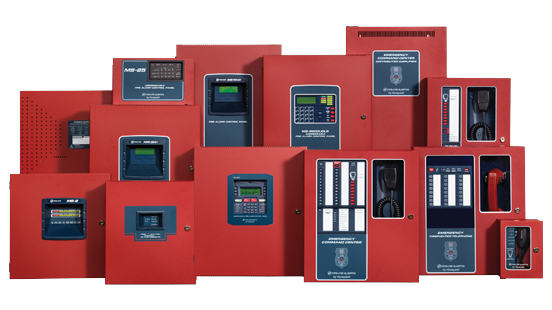
  • Why commercial fire alarm inspections fail (and who sees the report)

    Why commercial fire alarm inspections fail (and who sees the report)

    (919) 296-1803 Mon–Fri · 8am–5pm 809B Center Street, Apex, NC

    Why commercial fire alarm inspections fail

    Technician performing a commercial fire alarm inspection in Raleigh NC, testing a smoke detector against NFPA 72 requirements

    Commercial fire alarm inspections fail for a short list of reasons: contaminated or drifted detectors, dead or undersized batteries, wiring faults left unresolved since the last visit, devices blocked by tenant work, and missing documentation. In Raleigh, that failure reaches the city automatically, because your contractor uploads the report electronically.

    That last part is what most owners get wrong. A deficiency stopped being a private conversation between you and your service company in 2015. So let’s cover the mechanism first, then the deficiencies, because knowing who reads the report changes how you treat the findings.

    How a failed fire alarm inspection reaches Raleigh

    Under City of Raleigh Ordinance No. 2015-492, effective November 1, 2015, all third-party fire protection inspection reports have to be submitted electronically through The Compliance Engine, a system operated by Brycer, LLC in partnership with the Raleigh Fire Marshal’s Office.

    The contractor uploads, not you. That matters more than it sounds. The city’s own guidance states a business “will be out of compliance until the Fire Protection Company submits the report,” so you can pay for an inspection, pass it cleanly, and still sit in the non-compliant column because nobody hit submit.

    Systems covered by the requirement: fire alarm, fire sprinkler, hood suppression, hood cleaning, private fire hydrants, and spray booths. Fire alarm systems and private hydrants report annually. Hood suppression reports every six months.

    Brycer charges the contractor roughly $10 to $12 per initial report. Deficiency-repair reports and acceptance test documentation are free, which removes any excuse for not documenting a correction. The city also states plainly that one purpose of the program is reducing false alarm activity, so the data gets read, not filed.

    What this changes for you

    • Ask your contractor for the Compliance Engine confirmation, not just the paper report.
    • Open deficiencies stay visible to the Fire Marshal’s Office until a repair report is filed.
    • Repair documentation costs the contractor nothing, so a “we’ll get to it” answer has no cost basis.
    • If you own buildings in several Wake County towns, confirm which ones use third-party reporting. Programs vary.

    How often your system has to be inspected and tested

    Most failed inspections trace back to work that was skipped between annual visits. NFPA 72 Chapter 14 sets the frequencies, and they are not all annual.

    ComponentVisual inspectionFunctional test
    Fire alarm control unitAnnually if monitored, weekly if notAnnually
    System smoke detectorsSemiannuallyAnnually
    Heat detectorsSemiannuallyAnnually, with restorable types tested on a rotating schedule so all are covered within five years
    Duct smoke detectorsSemiannuallyAnnually
    Notification appliancesSemiannuallyAnnually
    Sealed lead-acid batteriesSemiannuallyCharger and discharge test annually, load voltage semiannually
    Secondary power supplyNot specifiedAnnually, with primary power disconnected
    Smoke detector sensitivityNot specifiedWithin one year of installation, then every alternate year

    Read that last row carefully. NFPA 72 allows the sensitivity interval to stretch to a maximum of five years after two consecutive tests come back inside the detector’s marked range. That allowance was written for clean, stable environments. A dusty warehouse should never be on a five-year interval, and if your provider put you there without a conversation about your building, ask why. Detectors testing outside their listed range must be cleaned and recalibrated or replaced. A magnet test does not satisfy it.

    What actually gets written up

    The physical deficiencies repeat across buildings with unusual consistency.

    Detectors outside their listed sensitivity range. The most common finding, and the one owners argue with most, because the device still alarms when tested. Alarming is not the standard. Alarming inside its listed range is.

    Batteries that fail load testing. A standard protected-premises system carries 24 hours of standby plus five minutes of alarm at full notification appliance load. Voice evacuation systems need 24 hours plus 15 minutes at maximum connected load. Calculations include a 1.25 derating factor, so a panel that grew by two notification circuits since the last upgrade may be undersized on paper regardless of battery age.

    Devices blocked, painted, or crowded by somebody else. New ductwork, stacked inventory in a warehouse aisle, a strobe hidden behind signage, a detector now sitting less than 36 inches from a supply diffuser after an HVAC change. The installer did nothing wrong. The building changed around the system.

    Unresolved trouble conditions. Ground faults and open circuits that have been present so long the staff stopped seeing the yellow light. These carry compliance exposure beyond the inspection itself, which we cover in trouble signals and the fire watch clock.

    Dust covers still on detectors after construction. A capped detector reports normal to the panel. It generates no trouble signal at all. Every renovation needs a written list of covered devices and a walk to confirm removal.

    Sequence of operation that no longer matches the building. Elevator recall, HVAC shutdown, magnetic door holders, and damper release all get tested against a written sequence. When a tenant build-out added doors nobody documented, the test fails on paper even though the hardware works.

    The documentation failures nobody expects

    Paperwork sinks more inspections than hardware does, and this is the section competitors skip entirely.

    NFPA 72 puts documentation in Chapter 7 and records in Section 14.6. Section 14.6.1.1 says that on acceptance the owner receives reproducible as-built drawings, operation and maintenance manuals, and a written sequence of operation. Section 14.6.1.3 says the owner keeps those records for the life of the system. Supervising station records are retained not less than 12 months under Section 14.6.3.

    Then there is the detail almost nobody follows. Sections 7.7.2.3 and 7.7.2.5 require record documentation to be stored in a documentation cabinet labeled SYSTEM RECORD DOCUMENTS. Not folded inside the control unit enclosure, where most buildings keep it, and where heat and vibration eventually destroy it.

    The report itself has required content. NFPA 72 Figure 14.6.2.4 provides the standard form. The report needs the date and technician name, the devices, zones, and circuits tested, results including every failure, deficiencies with corrective action noted, the inspector signature, and identification of the system and owner. A report that says “system tested, all functions normal” is not a compliant record and will not help you in a claim.

    The 10-year detector rule, stated correctly

    This gets repeated wrong constantly, including by companies selling replacements. NFPA 72 requires 10-year replacement of smoke alarms, meaning the standalone single- and multiple-station units in dwelling units. For system smoke detectors wired to a commercial fire alarm panel, NFPA 72 sets no fixed expiration date. It requires periodic sensitivity testing and replacement when a detector falls outside its listed range. System Sensor, the largest US detector manufacturer, states that system-connected smoke detectors may be deployed successfully for many years with no scheduled end-of-life replacement prescribed.

    Manufacturers and plenty of AHJs still recommend planned replacement near the 10-year mark, and heat detectors commonly last 15 years or more. Where a clock does apply, it runs from the date of manufacture printed on the housing, not the install date. If a vendor cites a code mandate for commercial detector replacement, ask them to point at the section.

    What a failed inspection costs

    Direct costs first. Industry pricing guides put annual fire alarm inspection at roughly $300 to $1,000 under 5,000 square feet, $1,000 to $3,500 for 5,000 to 15,000, $3,500 to $8,000 for 15,000 to 50,000, and $7,000 to $15,000 and up above that. Per-device cost lands around $12 to $30. Re-inspection fees run $50 to $200, and a scissor lift for high-bay access adds about $600 a day. Industry figures, published in 2025, and your quotes will vary.

    The indirect costs are larger. An open deficiency in The Compliance Engine stays visible to the Fire Marshal’s Office and attracts attention on your next inspection. If it takes a required device out of service, you may owe a fire watch. And many commercial property policies carry a protective safeguards endorsement, ISO form CP 04 11, which makes a working fire alarm system a condition of coverage rather than a discount. Open deficiencies are what a carrier’s loss control review looks for.

    How to pass the next one

    Schedule the semiannual work, not just the annual. Half the frequencies in that table are twice a year, and a contract priced around a single yearly visit cannot meet them.

    Walk the building before the technician arrives. Look for stacked inventory blocking devices, new ductwork near detectors, painted strobes, and anything a tenant hung in front of a pull station. Thirty minutes of walking prevents most blocked-device write-ups.

    Pull your last report and read the deficiency section. Correct those items first and have the repair documented, since repair reports cost your contractor nothing to file. Then ask the two questions that predict everything: what sensitivity interval are we on and why, and can I see the Compliance Engine submission confirmation for last year? A contractor running a real NFPA 72 inspection and maintenance program answers both in under a minute.

    If the deficiency list keeps growing every year on the same devices, the problem is design rather than maintenance, and the fix is a system assessment instead of another repair. That is also usually the same root cause behind repeat false alarms.

    Inspection due, or a deficiency list you can’t close?

    FireTek Systems inspects and maintains commercial fire alarm systems across Raleigh, Cary, Apex, and Wake County with licensed in-house technicians. We file your Compliance Engine report and send you the confirmation.

    Schedule a free assessment (919) 296-1803

    Frequently asked questions

    How often does a commercial fire alarm system need to be inspected in North Carolina?

    Annually for the full functional test, with semiannual visual inspection of most initiating devices and notification appliances under NFPA 72 Chapter 14. Smoke detector sensitivity testing is required within one year of installation and every alternate year after. In Raleigh the annual report must be filed electronically through The Compliance Engine by your contractor.

    Who submits my fire alarm inspection report to the City of Raleigh?

    The fire protection contractor who performed the inspection, through The Compliance Engine, under Ordinance No. 2015-492. The city states a business remains out of compliance until the fire protection company submits the report. Ask for the submission confirmation rather than assuming it happened.

    What happens if my fire alarm inspection fails?

    You get a deficiency list, and in Raleigh that report reaches the Fire Marshal’s Office through The Compliance Engine. Correct the deficiencies and have your contractor file a repair report, which Brycer does not charge for. If a deficiency leaves a required device out of service, impairment and fire watch obligations may apply until it is fixed.

    Do commercial smoke detectors have to be replaced every 10 years?

    No. The 10-year rule applies to single- and multiple-station smoke alarms in dwelling units. NFPA 72 sets no fixed replacement age for system smoke detectors on a commercial panel. It requires sensitivity testing and replacement when a detector falls outside its listed range, though planned replacement near 10 years remains a common manufacturer recommendation.

    Where am I supposed to keep my fire alarm records?

    NFPA 72 Sections 7.7.2.3 and 7.7.2.5 call for record documentation to be stored in a documentation cabinet labeled SYSTEM RECORD DOCUMENTS, rather than inside the control unit. Section 14.6.1.3 requires the owner to retain those records for the life of the system, including as-built drawings, the written sequence of operation, and every inspection report.

    Sources: City of Raleigh, inspections and The Compliance Engine (Ord. No. 2015-492) · System Sensor, life expectancy of system smoke detectors · Fire alarm inspection cost benchmarks, industry guide · IRMI, protective safeguards endorsement · NC OSFM, current codes · NFPA 72, Chapters 7, 10, and 14. Verify against the edition your AHJ adopted. North Carolina currently enforces the 2018 NC Fire Prevention Code.
    What our Triangle customers say
    “FireTek handled our fire alarm system end to end — professional, code-compliant, and always responsive when we need them.”
    Facilities Director · Raleigh
    Real people. Real protection.

    Ready to protect what matters most?

    Get a free, no-pressure consultation with a local FireTek specialist serving Raleigh and all of Wake County.

  • Fire alarm trouble signal? There’s a clock running you can’t see

    Fire alarm trouble signal? There’s a clock running you can’t see

    (919) 296-1803 Mon–Fri · 8am–5pm 809B Center Street, Apex, NC

    Fire alarm trouble signals and the clock nobody mentions

    Commercial fire alarm control panel displaying a trouble signal and ground fault condition in a Raleigh NC facility

    A fire alarm trouble signal means the panel found a fault in its own wiring, power, or devices, so part of your system may not respond in a fire. Silencing the buzzer acknowledges the tone. It does not clear the fault. In Raleigh, four hours of impairment inside any 24-hour period starts a required fire watch.

    The panel is beeping. Somebody hit silence, and the yellow light is still on. That is where most of these stories stall, because a trouble condition does not stop anyone from working. The building runs fine. The alarm still works, probably. Mostly. Here is what each signal means, how long the code lets you leave it, and what the delay costs.

    The three signals a fire alarm panel can send

    Every commercial fire alarm control panel produces three distinct signal types. Getting them straight solves most of the confusion here, because people call all three “the alarm going off.”

    SignalWhat triggers itWhat happensYour move
    AlarmSmoke detector, heat detector, manual pull station, sprinkler waterflow switchAppliances sound, occupants evacuate, the central station dispatches the fire departmentEvacuate. Investigate after.
    SupervisoryA device watching system readiness, most often a sprinkler tamper switch showing a valve off its normal positionDistinct tone at the panel and a central station notification. No evacuation.Restore the valve position and find out who moved it
    TroubleA fault in the system itself: open circuit, ground fault, loss of AC power, low battery, a device that stopped reportingTrouble tone and yellow indicator, central station notification. No evacuation.Diagnose and repair. The clock starts here.

    Supervisory is the one people miss, and it is the most dangerous of the three to shrug off. NFPA’s U.S. Experience with Sprinklers research has repeatedly found the biggest single reason sprinklers fail to operate is that somebody shut the system off: 59 percent of failures in the 2017 report covering 2010 to 2014, and roughly 60 percent across editions.

    What a trouble signal is actually telling you

    A trouble means the panel can no longer verify that some part of itself is working. That is different from a failure. It is the panel saying it lost confidence.

    Ground faults lead the list. Unintended contact between a circuit conductor and building ground, usually from a pinched wire, a corroded terminal in a damp spot, or water in an outdoor raceway. The circuit still works today. It may not tomorrow, and moisture-driven faults rarely stay put.

    Open circuits come next. A broken conductor, a detector pulled off its base during a ceiling tile job, a terminal screw somebody never torqued down. Everything downstream of the break is now unmonitored, and the panel knows it.

    Then batteries, the most predictable trouble in your building and the most commonly deferred. Sealed lead-acid batteries in a protected-premises panel have to carry 24 hours of standby plus five minutes of alarm at full notification appliance load, and the calculation includes a 1.25 derating factor. A battery that reads fine at rest can still collapse under load, which is what the annual discharge test exists to catch.

    After that comes AC power loss, which turns a condition into a countdown. Then communication failure between the panel and the supervising station, meaning your signals reach nobody. And device trouble, where one detector reports contamination or falls off the loop.

    The clock nobody mentions

    Here is the part most articles on trouble signals leave out. Any trouble that leaves a required part of your system non-functional is an impairment, and impairments are governed by Section 901.7, Systems Out of Service, of the NC Fire Prevention Code.

    Section 901.7 is short and specific. It calls for an impairment coordinator (901.7.1) and a tag on the system showing it is out of service (901.7.2), placed where people will see it (901.7.3). It separates preplanned impairments (901.7.4) from emergency ones (901.7.5), and requires verification that the system is restored to working order before the impairment closes out (901.7.6).

    The tag requirement surprises people. A physical out-of-service tag, on the system, visible. Not a line in a maintenance log.

    When a fire watch starts in Raleigh

    The City of Raleigh Office of the Fire Marshal sets the threshold at four hours. If a required fire protection system is non-functional for more than four hours in a 24-hour period, you owe a fire watch.

    • Notify all three: your fire alarm monitoring company, the local fire department, and the Office of the Fire Marshal at 919-996-6392 or fireprevention@raleighnc.gov. Notify the Fire Marshal again on restoration.
    • Patrol every 15 minutes where there are sleeping occupants, and in institutional or assembly occupancies. Every 30 minutes everywhere else.
    • Fire watch personnel may have no other assigned duties. A receptionist who also walks the floor does not satisfy this.
    • Keep a written log of every patrol.

    Fire watch rules belong to your AHJ and are not uniform across North Carolina. Charlotte, for comparison, specifies hourly patrols and no four-hour threshold. If your building sits in Cary, Apex, or Garner, ask your own fire marshal what they enforce before the night you need the answer.

    What a week of waiting actually costs

    The timeline below is an illustration built from published rate ranges, not a case study. Run it against your own building and AHJ.

    WhenWhat is happeningRunning cost
    Hour 0Ground fault trouble annunciates. Someone silences it. Nobody writes down the display text.$0
    Hour 4If the fault took a required device or circuit out of service, you crossed Raleigh’s threshold. Fire watch and three-party notification are owed.Clock starts
    Hours 4 to 24Fire watch at $35 to $50 an hour scheduled ahead, or $150 to $200 and up if you deploy on an emergency basis$700 to $1,000 for day one
    Days 2 to 4Waiting on a part. Around-the-clock coverage at standard rates runs roughly $840 to $1,200 a day.$2,500 to $3,600
    Day 4The fault spreads. A second device drops off the loop, so you add emergency service rates on top of the watch.Repair cost climbs
    Day 7Cumulative fire watch before anyone has touched the wiring$6,000 to $8,400
    AfterNotice of violation, AHJ attention on every future inspection, worst case an occupancy restrictionNot billable, still expensive

    The repair, in most cases like this, was a two-hour service call.

    There is one more exposure that never shows up on an invoice. Many commercial property policies carry a protective safeguards endorsement, ISO form CP 04 11, which makes a working fire alarm or sprinkler system a condition of coverage rather than a discount. If the safeguard is impaired and you fail to notify the carrier, property coverage can be suspended until the system is restored to working order. That is not a rate increase. That is no coverage.

    Sprinkler systems run on a different clock

    Do not conflate the two thresholds, because plenty of people do.

    NFPA 25 sets the impairment threshold for water-based systems at more than 10 hours out of service in a 24-hour period. Cross it and you owe formal impairment procedures: evacuate the affected portion, establish a temporary water supply, or run an approved fire watch. Raleigh’s fire alarm threshold is four hours. Different standards, different systems. The stricter number governs whichever system is down, and if both are impaired you work to four. Valve position is worth monitoring electronically rather than trusting a padlock and a walk-through.

    What to do in the first hour

    Do not silence and walk away. Silence acknowledges the tone. It does not clear the condition, and on most panels the trouble re-annunciates anyway.

    Photograph the panel display with the trouble text and date visible, then write down the exact wording, including any address, loop, or point number. That cuts diagnostic time more than anything else you can do, and it is the detail that vanishes the moment somebody resets the panel.

    Then call your service provider with a specific question: does this trouble take any required device out of service, and when did the condition begin? The answer decides whether your clock is running. If nobody can tell you, that is its own answer, and our piece on what to do when your fire alarm company stops answering covers the next move.

    If the answer is yes, start the fire watch and make the notifications before you start negotiating a repair window. You cannot backdate a fire watch.

    Trouble signal, first hour

    • Photograph the panel display with the full trouble text and date, before anyone resets it.
    • Ask your provider whether a required device or circuit is out of service, and when the condition started.
    • If yes, notify monitoring, the fire department, and the Fire Marshal’s office, then open a written patrol log.
    • Tag the system out of service and place the tag where it will be seen, per Section 901.7.

    One pattern to watch: repeat troubles on the same circuit that clear themselves overnight. Those are almost always moisture or a marginal connection, and they become a full circuit failure during the first hard rain. A real NFPA 72 inspection and test program catches them while they are cheap. If those devices are also nuisance-tripping, see why commercial fire alarms keep false alarming.

    Trouble light on right now?

    FireTek Systems runs licensed in-house technicians across Raleigh, Cary, Apex, and Wake County. We diagnose the fault, document the impairment properly, and get you off fire watch as fast as the repair allows.

    Schedule a free assessment (919) 296-1803

    Frequently asked questions

    What is the difference between a supervisory signal and a trouble signal?

    A supervisory signal reports that a fire protection system is off its normal ready state, most commonly a sprinkler control valve that has been closed. A trouble signal reports a fault inside the fire alarm system itself, such as a ground fault, open circuit, or low battery. Neither one sounds an evacuation, and both should be corrected the same day.

    How long can a commercial fire alarm be out of service before a fire watch is required?

    In Raleigh, more than four hours in any 24-hour period. That triggers a documented fire watch with patrols every 15 minutes in sleeping, institutional, and assembly occupancies, or every 30 minutes elsewhere, plus notification to your monitoring company, the fire department, and the Office of the Fire Marshal at 919-996-6392. Other jurisdictions set their own thresholds, so confirm with your AHJ.

    Why does my fire alarm panel keep beeping after I press silence?

    Silence only acknowledges the tone for the current condition. If the fault is intermittent, or if a new fault occurs, the panel re-annunciates. Panels are also commonly programmed to resound trouble tones after a set interval so an unresolved condition cannot be buried.

    What causes a ground fault on a fire alarm system?

    Almost always moisture or mechanical damage. Water in an outdoor or unconditioned raceway, a conductor pinched behind a device backbox, corroded terminals, or insulation nicked during another trade’s work. Ground faults are frequently intermittent, which is why they get ignored until a circuit fails outright.

    Do I have to report a fire alarm impairment to anyone?

    Yes. Section 901.7 of the NC Fire Prevention Code requires an impairment coordinator, an out-of-service tag on the system, and notification handling for both preplanned and emergency impairments. In Raleigh you notify your monitoring company, the fire department, and the Office of the Fire Marshal, then notify the Fire Marshal again when the system is restored. Your insurance carrier may also require notice under a protective safeguards endorsement.

    Sources: City of Raleigh Office of the Fire Marshal, Fire Watch Code Information Sheet · NC Fire Prevention Code §901.7, Systems Out of Service · NFPA, U.S. Experience with Sprinklers · IRMI, protective safeguards endorsement · Fire watch cost ranges, industry sourced · NFPA 72 Chapter 10 and NFPA 25 impairment provisions. Verify code against the edition your AHJ adopted. North Carolina currently enforces the 2018 NC Fire Prevention Code.
    What our Triangle customers say
    “FireTek handled our fire alarm system end to end — professional, code-compliant, and always responsive when we need them.”
    Facilities Director · Raleigh
    Real people. Real protection.

    Ready to protect what matters most?

    Get a free, no-pressure consultation with a local FireTek specialist serving Raleigh and all of Wake County.